
Reviewed · MIAMI GHOST TOURS
Miami Cocaine Capital in the 80’s- History tour-
Miami’s cocaine-era story comes alive in a private convertible Jeep tour through Coconut Grove, where luxury hotels, marinas, real estate, and fast boats once crossed paths with the city’s drug trade. You’ll see the Mutiny Hotel area, pass Vizcaya and Miami City Hall, and hear how enormous amounts of illegal money moved through South Florida.
I like the small scale: your group of up to four rides together, rather than being folded into a large bus. I also like the mix of history and scenery, from the Miami skyline and Biscayne Bay to free-roaming peacocks and old marinas. The main drawback is time. At about one hour, this is a quick overview, not a long historical study, and there is no bathroom stop included.
Key points to know before you book
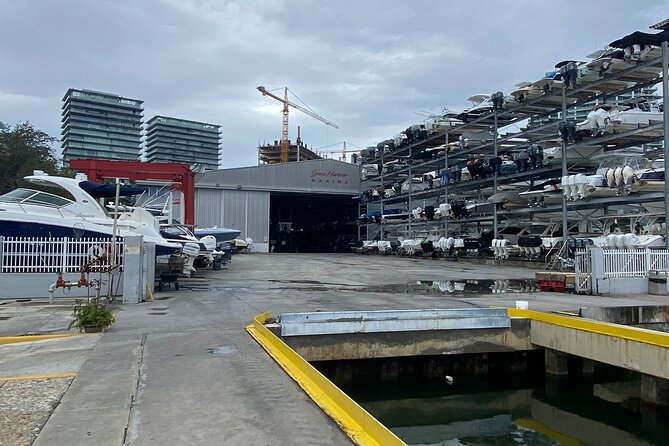
- The Mutiny Hotel is the main attraction: Learn why this Coconut Grove hotel became a meeting place for drug dealers, celebrities, police, informants, and crooked politicians in the 1980s.
- You get a private ride: The convertible Jeep holds a maximum of four people, making it a good fit for a couple, family, or small group.
- The tour links crime and real estate: You’ll hear how drug money flowed into Miami property during a period when real estate generated about $9 billion a year locally.
- Coconut Grove supplies the setting: Marinas, luxury homes, old hotels, peacocks, and Biscayne Bay give the story a strong sense of place.
- The price is per group: At $75 for up to four people, the cost can be quite reasonable when shared.
- Plan around the weather: The experience requires good weather, and changes made less than 24 hours before departure are not accepted.
Miami’s cocaine story begins with money, not just crime
This tour works best if you want to understand how Miami changed during the 1970s and early 1980s. The story is not limited to arrests, shootouts, and smugglers. It also follows the money into property, hotels, boats, restaurants, and the city’s growing luxury market.
From the convertible Jeep, you’ll look toward the Miami skyline while your guide explains the link between real estate and the drug trade. The figures help show the scale of the boom: local real estate generated about $9 billion a year, while the drug trade was estimated to bring about $12 billion into the local economy.
That comparison gives the tour a useful angle. Cocaine money did not sit in one hidden room. It moved through legitimate businesses and helped feed Miami’s rapid growth. You’ll get a short explanation of how property became one of the most visible places for illegal cash to land.
I like this opening because it places the crime story inside Miami’s wider economic story. You’re not simply looking at old buildings and hearing colorful tales. You’re being shown how money affected the city you see today.
Still, keep your expectations in check. The tour lasts about an hour, so the guide can only sketch the larger picture. If you want court cases, named traffickers, detailed timelines, or a serious account of law enforcement, this ride may feel light. It is better understood as a focused introduction with strong visual stops.
More ghost and true-crime walks in Miami:
- Menace, Murder & Malice: Miami Ghost Tours
★ 4.5 · 100 reviews - Miami Boos and Booze Haunted Pub Crawl
★ 4.5 · 17 reviews - Miami Haunts of South Beach Ghost Tour
★ 4.5 · 11 reviews
Vizcaya adds beauty, theft, and a sharp change of mood
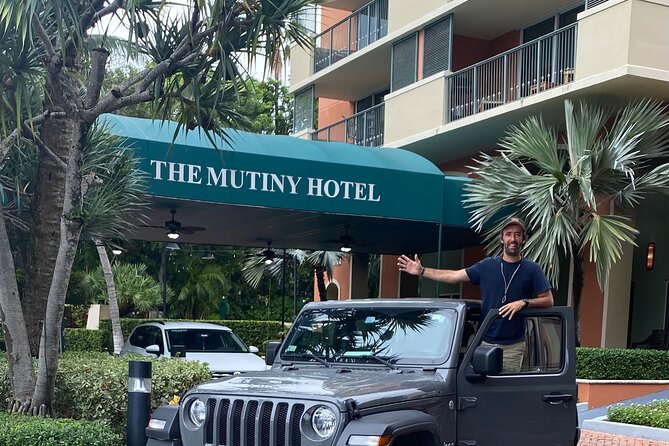
On the way toward Coconut Grove, the Jeep passes Vizcaya Museum and Gardens. The estate looks far removed from the rougher side of Miami’s cocaine years. Its European-style architecture sits beside Biscayne Bay, offering a calm and polished contrast to the flashy city nearby.
You’ll hear about Vizcaya’s own crime story. In 1971, three people from New York stole about $1.5 million in art, jewelry, and collectibles from the estate. They were caught in New York three days later, but only a small part of the stolen property was recovered.
This stop matters because it shows that Miami’s history of wealth and theft did not begin with the cocaine boom. Vizcaya was already a symbol of money, taste, and valuable possessions. Its presence gives the tour a wider time frame and helps you see how old wealth and new illegal wealth existed side by side.
The practical point is that you pass Vizcaya rather than tour the museum and gardens. The stop is for context and views, not an interior visit. If Vizcaya is high on your Miami list, plan a separate visit. This experience gives you a glimpse, but it does not replace museum admission or a proper garden visit.
Coconut Grove provides the right backdrop
Coconut Grove, often called The Grove, is the central setting for the ride. The area is known for marinas, elegant hotels, large houses, and a relaxed feel that differs from Miami’s downtown towers. It also supplied the access and privacy that helped make it attractive during the cocaine era.
As you drive through the district, your guide connects the homes and hotels to Miami’s drug-war years. You’ll hear how proximity to the water and nearby marinas helped make the area useful to people moving money and contraband.
The setting is one of the tour’s strongest features. You can see the kind of polished, expensive surroundings that made the period so notorious. The story feels more grounded when you are passing actual streets, waterfront areas, and buildings linked to the era.
Then there are the peacocks. They roam freely in Coconut Grove, and you may see their bright colors and long, showy tails during the drive. They are not part of the crime story, of course, but they add a wonderfully odd Miami detail to a tour otherwise filled with money, boats, and police work.
The open Jeep should make the ride more enjoyable on a pleasant day. You get better views than you would from a closed vehicle, and the small group makes it easier to follow the guide. On a hot, rainy, or windy day, the same setup may be less comfortable, which is why weather matters here.
Marinas and cigarette boats explain how the trade moved
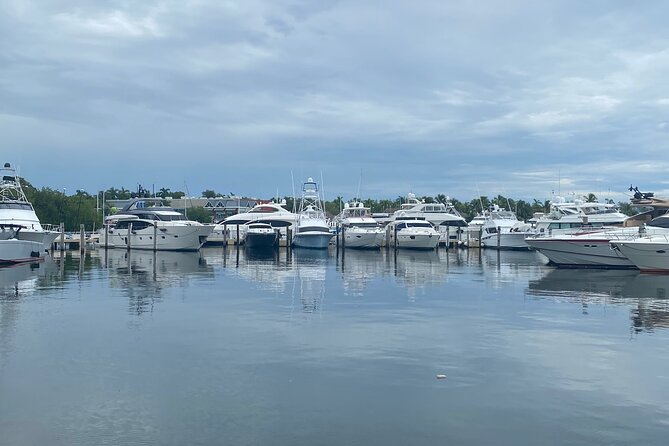
The tour passes one of the marinas around Coconut Grove and uses the waterfront to explain drug-running methods. The boats are part of the physical geography of the story. Water offered speed, access, and escape routes that were difficult for older Coast Guard patrol boats to match.
You’ll hear about cigarette boats, fast vessels used by smugglers to avoid the Coast Guard and DEA agents. The tour also connects this practice to the Prohibition era, when similar kinds of boats were used to move illegal goods.
This is a useful part of the experience because it explains the mechanics of the trade. The story is not only about kingpins in hotel rooms. It also involved boats, marinas, timing, and the challenge of stopping a fast vessel offshore.
You should remember that the tour passes by a marina rather than offering a boat ride. The boat history is told from the Jeep, and the emphasis is on understanding the route and the setting. If you want to spend time on the water, this is not the right product by itself.
More history and heritage tours in Miami:
- Award-winning Art Deco & History Walking Tour in Miami Beach
★ 5.0 · 138 reviews - Miami Beach Art Deco & History Bike Tour with Design Enthusiast
★ 5.0 · 135 reviews - Miami Small Group Boat Tour: History, Wildlife, and Stiltsville
★ 5.0 · 65 reviews - Miami Beach Food & History Tour In Sobe
★ 5.0 · 49 reviews
Miami City Hall carries an earlier aviation story
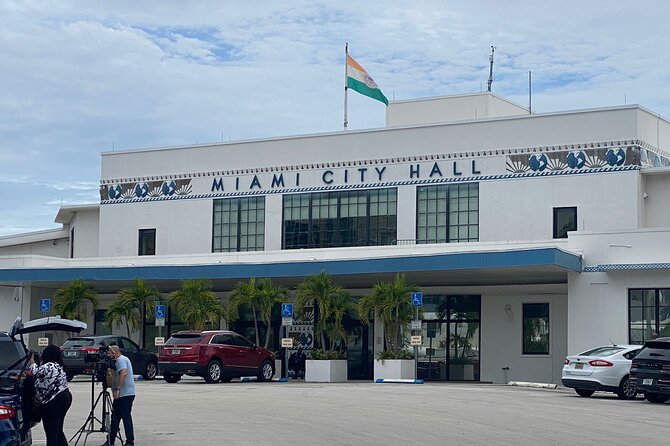
On the way toward the Mutiny, the Jeep passes Miami City Hall. The building was constructed in 1934 by Pan American Airlines as a flying-boat terminal. The city bought it in 1946, and after a short period as Jackie Heller’s Dinner Key Terrace restaurant, it became City Hall in 1954.
This detail gives the tour another useful layer. Miami’s waterfront has served many roles: aviation terminal, restaurant, government building, marina area, and part of the city’s nightlife and drug history. The building is a reminder that the city’s identity has shifted repeatedly as its waterfront economy changed.
You’ll see the structure from the vehicle, so again, this is a passing point rather than a full architectural visit. It is a brief stop in the guide’s larger story, but it helps tie the city’s older transportation history to the newer stories of wealth and smuggling.
The Mutiny Hotel is the tour’s key stop
The Mutiny Hotel in Coconut Grove is the strongest reason to choose this experience. During the cocaine boom, the hotel became known as a meeting place for drug dealers and celebrities. Its guest list also included politicians, spies, informants, police officers, and people on both sides of the law.
The hotel’s reputation was so strong that it was described as a mecca for cocaine kingpins. It was also one of the country’s most profitable hotels at the time, often booked solid and sending armored trucks away with bags of cash.
The money was not merely part of the background. The hotel reportedly sold more bottles of Dom Pérignon than any other establishment in the world. That detail captures the excess of the period better than a general statement about luxury. You can picture the mix of expensive champagne, celebrity culture, political connections, and illegal cash that made the Mutiny famous.
Your guide will explain the hotel’s role and the people who moved through it. The experience does not promise access to the hotel’s interior, and the stop is primarily about seeing the location and hearing its history. That is enough for many people, since the building’s importance comes from what happened around it.
I like this part because it pulls the entire tour together. Real estate money, marinas, fast boats, celebrities, police, and nightlife all meet at the Mutiny. If you have watched documentaries about Miami’s cocaine years or simply want to understand why the city gained its notorious reputation, this is the stop that gives the ride its focus.
What the private Jeep format changes
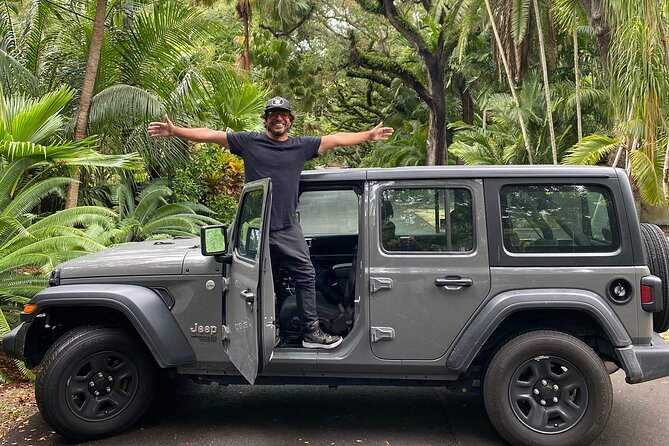
The tour costs $75 per group of up to four people, not $75 per person. That makes the value much better for a full group. Four people sharing the ride pay less than $19 each, while a solo visitor or couple will pay more per person.
You receive a driver-guide, a convertible Jeep, bottled water, and the option to play your own music through Bluetooth. The music option is a small but personal touch, though I would keep the volume low so you can hear the history being explained.
A private vehicle also means that only your party takes part. You can avoid a large group and keep the experience more relaxed. The small capacity is particularly useful if you want to ask questions or prefer not to spend an hour with strangers.
The tradeoff is limited space. Four adults can fit, but the Jeep is not designed for spreading out. The listing says most people can participate and that the tour is near public transportation, but it does not provide detailed mobility information. If you have specific accessibility needs, confirm them before booking.
The tour starts at David T. Kennedy Park, at 2400 South Bayshore Drive, and returns there at the end. Allow a little extra time to find the meeting point, since the ride begins and ends at the park rather than at your hotel.
Timing, weather, and cancellation details
At roughly one hour, this fits neatly into a Miami day. You could schedule it before another Coconut Grove activity or use it as a compact introduction to the area. Because the tour covers several points in a short time, stay alert and listen closely when the guide shifts from one subject to another.
There is no bathroom included. Use facilities before meeting the Jeep, especially if you are planning other activities immediately afterward.
The open-air format depends on good weather. If poor weather cancels the experience, you can receive a different date or a full refund. You can also cancel for a full refund if you do so at least 24 hours before the start time. Cancellations or changes made inside that 24-hour window are not refunded or accepted.
The experience also requires a minimum number of participants. If the operator cancels because that minimum is not met, you’ll be offered another date or experience, or a full refund.
The tour is commonly booked about 16 days ahead, so reserving early is sensible if your Miami dates are fixed. Confirmation is provided at booking, and the activity is offered with a mobile ticket.
Who will get the most from this tour
I would choose this ride if you have a clear interest in Miami during the 1970s and 1980s. It suits fans of organized crime history, drug-war stories, old nightlife, waterfront development, and the city’s stranger local characters.
It is also a good choice for a small group that wants something more specific than a general sightseeing drive. The focus stays on Coconut Grove and the cocaine era, rather than trying to cover every major Miami attraction.
You may want something else if you prefer museums, long walking tours, or detailed academic history. The tour does not include a visit inside Vizcaya or the Mutiny, and it does not offer a boat excursion. Its strength is the combination of a moving city view, a private vehicle, and a concise story about how money changed Miami.
The available customer score is 4.6 out of 5 from 10 ratings, with 90 percent recommending the experience. The most useful praise centers on the old Miami highlights, the guide, and the fun facts. That matches the tour’s purpose well: it gives you a lively glimpse of the city’s past rather than a long, exhaustive lecture.
Should you book the Miami Cocaine Capital tour?
Book it if you want a short, private, highly focused ride through the places tied to Miami’s cocaine boom. The Mutiny Hotel, Coconut Grove marinas, open Jeep, and small group are the strongest reasons to go.
At $75 per group, it is especially good value for three or four people. I would schedule it in fair weather, use the park as your starting reference, and allow time for a bathroom stop beforehand.
Skip it if you need an in-depth history, indoor sightseeing, or a full-day activity. For the right audience, though, this is an entertaining way to connect Miami’s glamorous waterfront with the money, boats, hotels, and corruption that shaped its most notorious decade.
FAQ
How long does the Miami Cocaine Capital history tour last?
The tour lasts approximately one hour.
How much does the tour cost?
The price is $75 per group of up to four people.
Is the tour private?
Yes. Only your group takes part, with a maximum of four people in each Jeep.
What vehicle is used?
The experience uses a convertible Jeep.
Where does the tour begin?
It begins at David T. Kennedy Park, 2400 South Bayshore Drive, Miami, Florida 33133.
Where does the tour end?
The tour returns to David T. Kennedy Park, the same place where it begins.
What places are covered?
The route includes views of the Miami skyline, Vizcaya Museum and Gardens, Coconut Grove, a local marina, Miami City Hall, and the Mutiny Hotel area.
Is the Mutiny Hotel included?
The tour passes by the Mutiny Hotel and explains its importance during Miami’s cocaine era. The information provided does not include an interior visit.
What is included in the price?
The price includes a driver-guide, convertible Jeep, bottled water, Bluetooth for your own music, and a private group experience.
Is a bathroom included?
No. A bathroom is not included, so plan to use one before the tour begins.
Can I cancel for a refund?
Yes, you can receive a full refund if you cancel at least 24 hours before the scheduled start time. Cancellations within 24 hours are not refunded.
What happens if the weather is poor?
If bad weather causes the tour to be canceled, you’ll be offered another date or a full refund.
New on the Miami list
- Miami: Wynwood Walls Street Art and Food Walking Tour★ 4.9 · 43 reviews
- Wynwood walking tour in French (2h)★ 4.9 · 9 reviews
- Wynwood Walls Street Art & Neighborhood Walking Tour★ 4.9 · 9 reviews
- Miami: HIDDEN WORLD OF MIAMI DESIGN DISTRICT★ 5.0 · 3 reviews
- Walking Tour with Cocktails(optional) Miami★ 4.9 · 18 reviews
- VIP Walking Tour of Little Havana★ 4.5 · 36 reviews
- Beach Yoga Experience in Miami Beach★ 5.0 · 53 reviews
- Beach Yoga & Tea Experience on South Beach★ 5.0 · 19 reviews
Miami Ghost Tours, compared.


Miami Beach Crime & Scandals Walk Tour with Crime Buff (Private)
Read our review →Browse the lists this tour appears in