
Reviewed · MIAMI BEACH ART DECO TOURS
Art Deco, History and Crime Bike Tour with Design Enthusiast
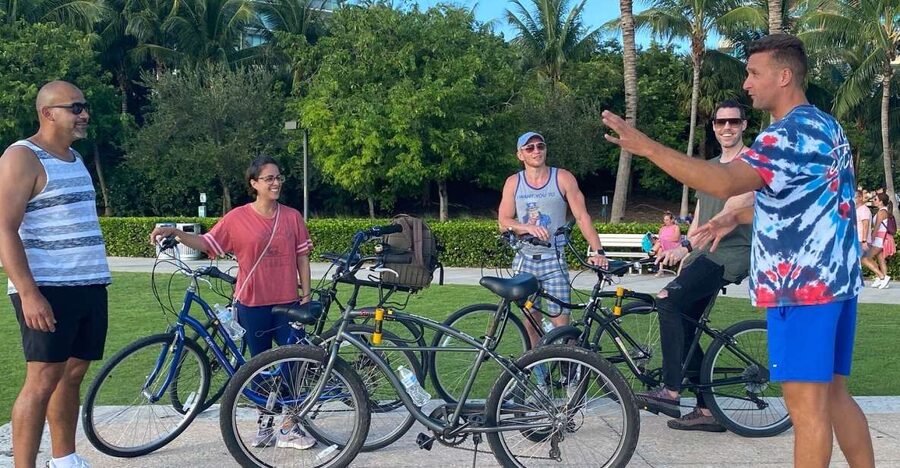
Miami Beach is mostly man-made, and that odd fact sets the tone for this tour. With local historian and Art Deco preservation advocate Damian leading the way, you ride through a city built on swamps, speculation, glamour, segregation, migration, and crime. The story is far stranger than the postcard.
I like the mix of architecture and scandal, since you are not just staring at pastel buildings without context. I also like the route beyond South Beach, reaching Surfside and Bal Harbour, with scenic stops along a roughly 20-mile round trip. The main drawback is clear: three hours on a bicycle and that distance require reasonable stamina, even though the ride includes plenty of stops.
Key points to know before you ride
- Damian leads with local expertise: He is involved with the Miami Design Preservation League and built the tour around Miami Beach’s architecture and past.
- The route covers more than South Beach: You ride through Miami Beach and continue toward Surfside and Bal Harbour.
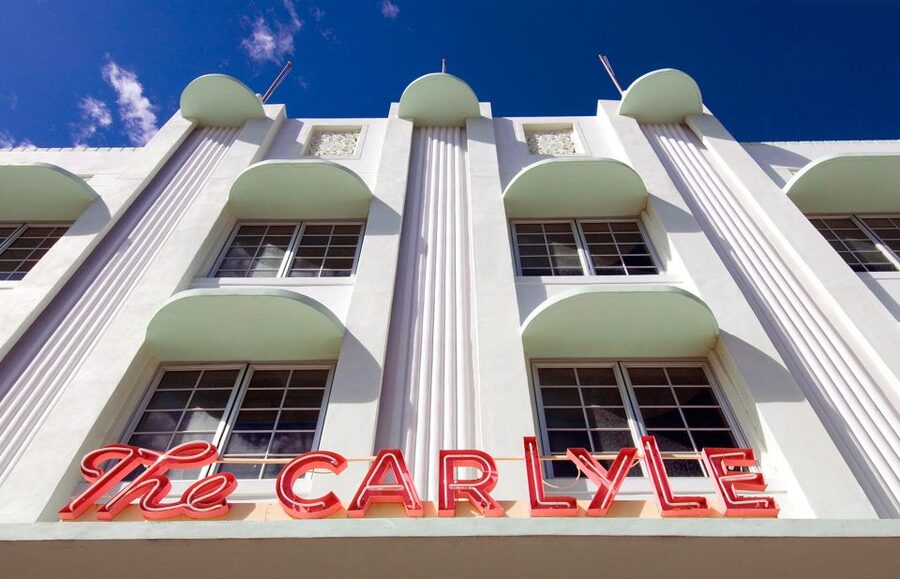
- Architecture comes with context: Art Deco, Mediterranean Revival, and MiMo buildings are explained as part of the city’s changing fortunes.
- The darker side is part of the tour: Expect stories about segregation, organized crime, the cocaine cowboys era, Miami Vice, and the murder of Gianni Versace.
- The ride is substantial but paced with stops: The full route is about 20 miles round trip, with scenic and historic pauses along the way.
- The $79 price covers the basics: Your guided tour, bicycle, water bottle, and helmet if required are included.
A city built from swamp, sand, and ambition
Before you look at Miami Beach’s famous hotels, it helps to understand how unlikely the place is. The tour explains that Biscayne Bay was once a shallow swamp and that much of Miami Beach was created by human effort. That background gives the streets a different feel: this was not an old coastal town that slowly grew. It was a planned project shaped by money, engineering, promotion, and bold dreams.
That is a useful opening for a bike tour because you can see the city change block by block. A grand hotel, a modest apartment building, a carefully preserved façade, and a newer development all point to different chapters in Miami Beach’s story.
Damian’s role matters here. He is not simply guiding you from one photo stop to another. His connection with the Miami Design Preservation League places the Art Deco district in a wider preservation story. You learn why these buildings matter, how Miami Beach developed, and why keeping them intact has taken sustained local work.
The tour also puts Miami Beach in national history. Muhammad Ali became world boxing champion for the first time here, and that detail helps show how the city functioned as more than a resort backdrop. It was also a stage for sport, entertainment, business, and public life.
More Art Deco walks on Miami Beach:
- The Official Art Deco Walking Tour by The Miami Design Preservation League
★ 5.0 · 1,580 reviews - Miami South Beach Art Deco Walking Tour
★ 5.0 · 1,039 reviews - Miami Beach Food and Art Deco Walking Tour
★ 4.5 · 245 reviews
Reading the Art Deco streets by bicycle
South Beach is easy to photograph and harder to understand. Its low-rise hotels, rounded corners, porthole windows, glass blocks, and bright colors can look like a single decorative style from a distance. On this ride, you get a clearer guide to the details and to the forces that shaped them.
The tour covers Art Deco, Mediterranean Revival, and MiMo, three styles that tell different parts of Miami Beach’s architectural story. Art Deco reflects the clean lines and machine-age optimism associated with the area’s famous hotel district. Mediterranean Revival points to an earlier fantasy of a resort city with courtyards, arches, and Old World decoration. MiMo, or Miami Modern, reflects a later period of experimentation and postwar confidence.
One special feature is the chance to enter the lobbies of select Art Deco hotels. That matters because the street façade is only half the experience. Interior spaces can show how these buildings were designed to welcome visitors, frame movement, and create a sense of luxury without relying on huge scale.
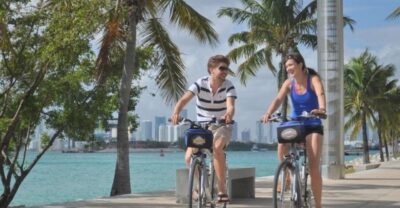
A bicycle is a smart way to study this district. You can cover more ground than on foot, but you still move slowly enough to notice a curved corner, a sign, or a building squeezed between larger projects. You also avoid the sealed-off feeling of a bus window. The city is around you: streets, parks, hotels, and the changing line of buildings.
Do not expect every minute to be spent in front of an architectural landmark. The tour is designed as a moving history lesson, so some sections are about getting from one part of the city to another. That is part of the trade-off for seeing a wider section of Miami Beach.
From South Beach toward Surfside and Bal Harbour
The route does not stop where the usual South Beach stroll ends. It continues north toward Surfside and Bal Harbour, two separate municipalities that add useful contrast to the central Miami Beach story.
This longer route gives you a look at how the area changes as you move away from the best-known Art Deco streets. You may notice a different rhythm of buildings, streets, and waterfront views. The exact stops can vary, but the tour description promises picturesque sections and historical locations across the wider area.
The distance is worth considering before booking. One review describes the ride as about 20 miles round trip, with enough scenic stops to keep it from becoming a nonstop workout. That sounds manageable for a regular cyclist, but it is still a serious outing. If you rarely ride a bicycle, the distance may be more important than the three-hour duration suggests.
The stopping pattern helps. You are not expected to pedal hard for three hours without a break. Stops give Damian time to tell stories and give you time to take in the surroundings. Still, you should choose comfortable clothing and treat this as an active sightseeing experience rather than a gentle ride around one compact neighborhood.
The route also makes the tour useful early in a Miami stay. You may spot restaurants and places you want to return to later. Since the ride crosses several areas, it can help you understand where South Beach ends and how the northern communities fit into the wider coastal area.
Miami’s past is not all sunshine
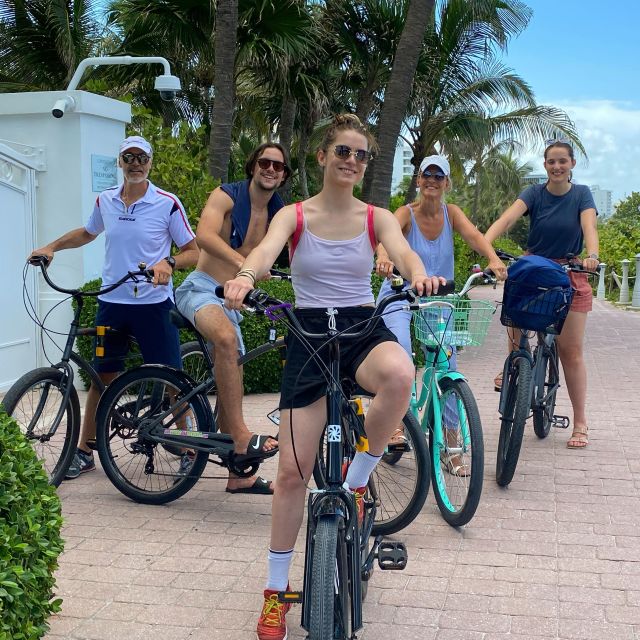
The tour’s strongest point is its range. It does not limit Miami Beach’s past to hotels, celebrities, and stylish façades. Damian also covers segregation, Black history, Jewish history, Cuban migration, and the social changes that remade the city.
These subjects add needed weight to the architecture. A preserved hotel can be beautiful, but its meaning changes when you learn who could stay there, who worked nearby, and who was excluded. The city’s Jewish history and Cuban migration also show how Miami Beach was shaped by communities arriving with their own traditions, businesses, and memories.
The tour connects those stories to broader changes in the United States. The Great Depression affected the city’s development, while later migration altered its culture and economy. Miami Beach’s identity was never fixed. It kept shifting as new residents, visitors, investors, and industries arrived.
I especially like this approach for travelers who want more than a list of dates. You are encouraged to see how architecture, money, race, migration, and tourism all affect one another. That turns the ride into a way of reading the city, not just a series of stops.
The material may also challenge the easy Miami image. The city promoted glamour, but it carried sharp inequalities and difficult conflicts. A good guide does not smooth those edges away, and this experience appears designed to keep them visible.
More bike tours in Miami:
- Miami: 2-Hour Art Deco Bike Tour
★ 4.6 · 155 reviews - Miami Beach Art Deco & History Bike Tour with Design Enthusiast
★ 5.0 · 135 reviews - Miami Beach Bike Tour
★ 4.5 · 113 reviews - Miami Beach Art Deco & Hidden Gems Bike Tour with Local Historian
★ 5.0 · 78 reviews
Crime stories from the cocaine cowboys era
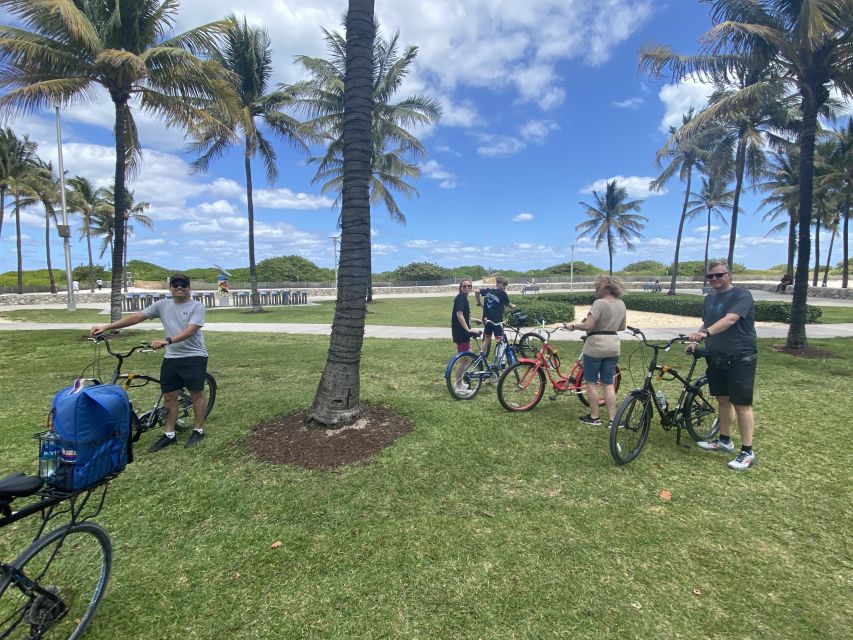
The final major thread is Miami’s criminal past. The tour includes scandal stories, the cocaine cowboys era, the influence of Miami Vice, and the murder of Gianni Versace.
This subject works best when it is tied to actual places, and the tour promises locations connected to the darker side of local history. You are not simply hearing a string of shocking anecdotes. You are moving through streets where the city’s public image, nightlife, wealth, and criminal economy collided.
The Miami Vice connection is especially useful because the television series helped turn Miami into an international symbol of neon, speed, drugs, and luxury. The tour can help separate that polished television image from the real social and criminal history behind it.
The Gianni Versace murder is another well-known chapter, but it takes on more meaning when placed within the city’s larger story. Miami Beach has long attracted celebrities, artists, wealthy visitors, and people seeking reinvention. That mix created glamour, but it also created unusual pressure and public attention.
Crime material is not for everyone. If you want a purely architectural tour, these stories may feel like a detour. If you enjoy true crime and social history, they add a strong second layer to the buildings and streets.
Why the bicycle format works
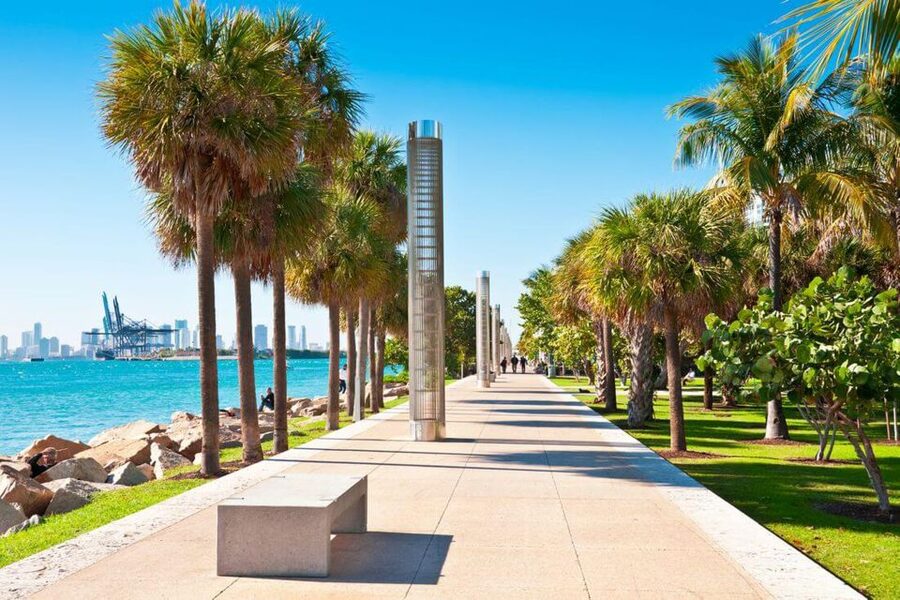
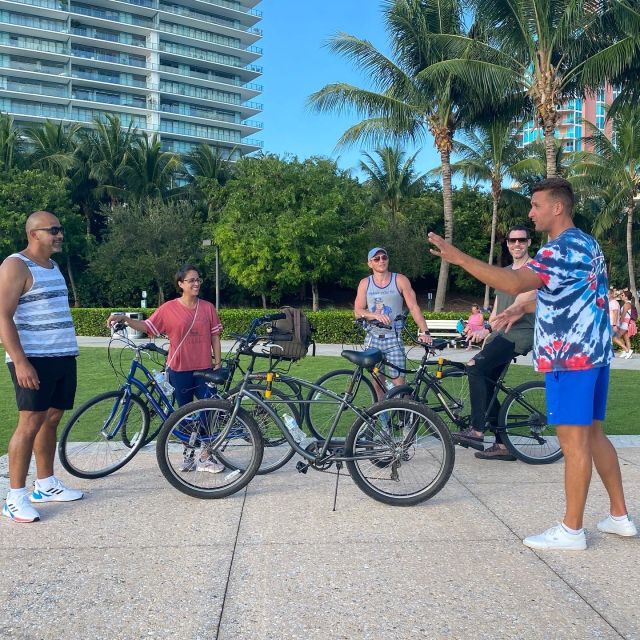
A bicycle gives you a useful middle ground. Walking would make the longer route impractical, while a vehicle would move too quickly and separate you from the street. You can cover South Beach, continue north, stop near parks and historic places, and still feel the city directly.
The ride also keeps the experience active. You are not sitting through a lecture, and the steady movement helps connect separate neighborhoods. For a family with older teenagers or adults, it can be a good shared activity. A family of four with children aged 16 and 20 found the format enjoyable and useful for finding places to visit later.
The included bicycle removes one common hassle. You do not need to arrange a rental separately at another location. A water bottle is included, and a helmet is provided if required. The meeting point is the bicycle rental shop, and the activity ends back there.
The main practical question is fitness. The full route may reach about 20 miles, so I would not book this if you are looking for a very short, casual pedal. The stops make the distance easier, but they do not erase it. The three-hour duration also means you should plan the rest of your day with some flexibility.
What $79 buys you
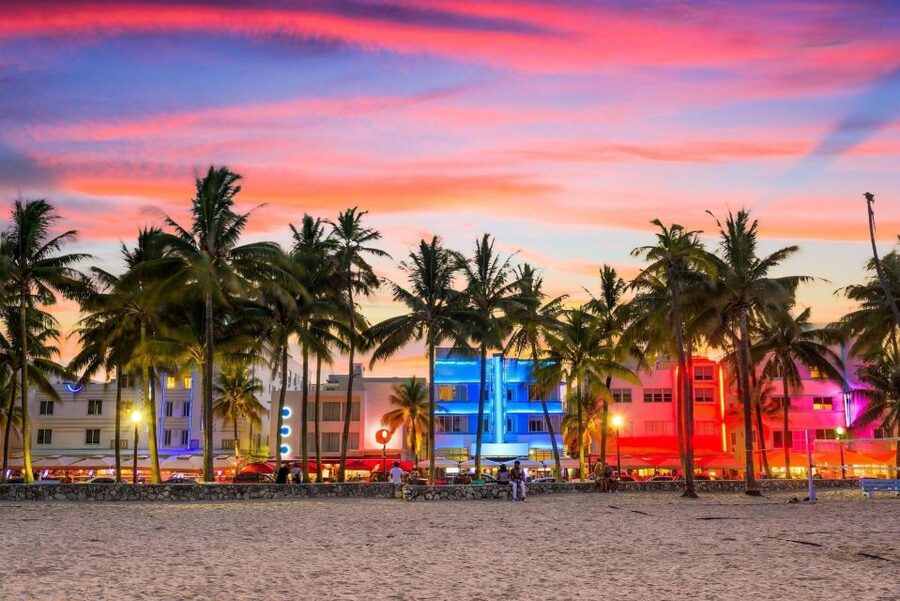
At $79 per person, the tour costs more than simply renting a bicycle and following a map. The value lies in the guide’s time, the route design, and the connections between architecture, local history, and crime stories.
A self-guided ride could show you many of the same streets, but it would not explain why Miami Beach was built on reclaimed land, how its architecture changed, or how migration and segregation shaped the city. You would also be unlikely to connect Art Deco hotels with the cocaine cowboys era or the Miami Vice image without doing substantial research first.
The price makes the most sense if you want one activity to cover several parts of Miami Beach. You receive the bicycle, water, and guided commentary in one booking. The tour also reaches Surfside and Bal Harbour, so you are paying for a broader route rather than a short circuit around one district.
It may feel less worthwhile if you already know Miami Beach well, dislike long bike rides, or want a tightly focused architecture walk. In that case, a shorter activity could suit you better. For a first visit, though, the mixture of orientation and storytelling gives the price a fair return.
The tour has a small review count but a perfect rating of 5 from 11 reviews. That is a positive sign, particularly because the strongest praise centers on Damian’s storytelling, friendliness, and command of the subject. I would treat the rating as encouragement, not as a substitute for considering the distance and subject matter.
Who will get the most from this ride?
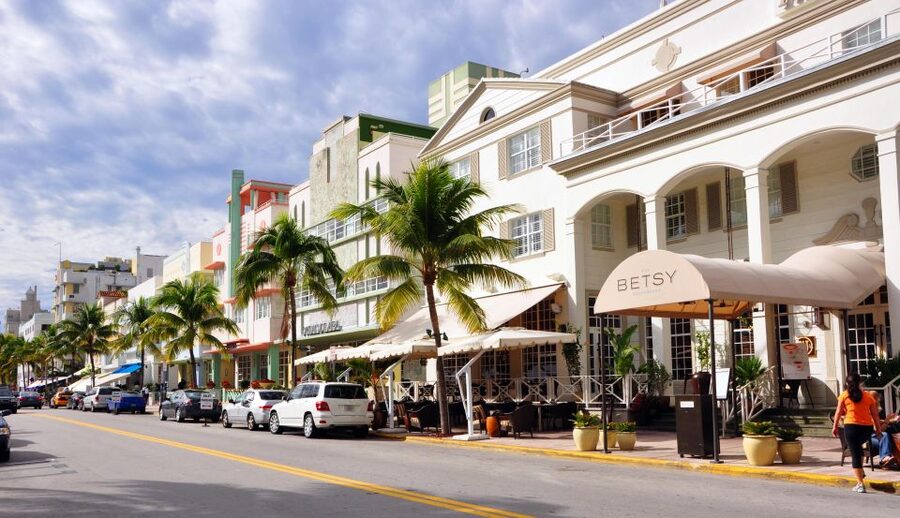
I would recommend it most to curious first-time visitors who want a quick but serious introduction to Miami Beach. You should enjoy history, architecture, or true crime, and you should be comfortable cycling for several hours with stops.
It is also a good fit for families with older children and young adults. The changing topics keep the experience from feeling like a formal architecture lesson, while the bicycle format adds movement and variety.
Couples and solo visitors can use it as a way to get their bearings. You may leave with a better sense of which neighborhoods to revisit, which buildings deserve another look, and where to find restaurants or other places of interest.
I would think twice if you have limited cycling experience, want an entirely relaxed morning, or prefer not to hear about murder and organized crime. Miami’s darker chapters are a major part of this experience, not a small footnote.
You can cancel up to 24 hours before the activity for a full refund, and the reserve-now, pay-later option keeps the booking flexible. The live tour is in English, so you should be comfortable following detailed spoken stories in that language.
Should you book the Art Deco, History and Crime Bike Tour?
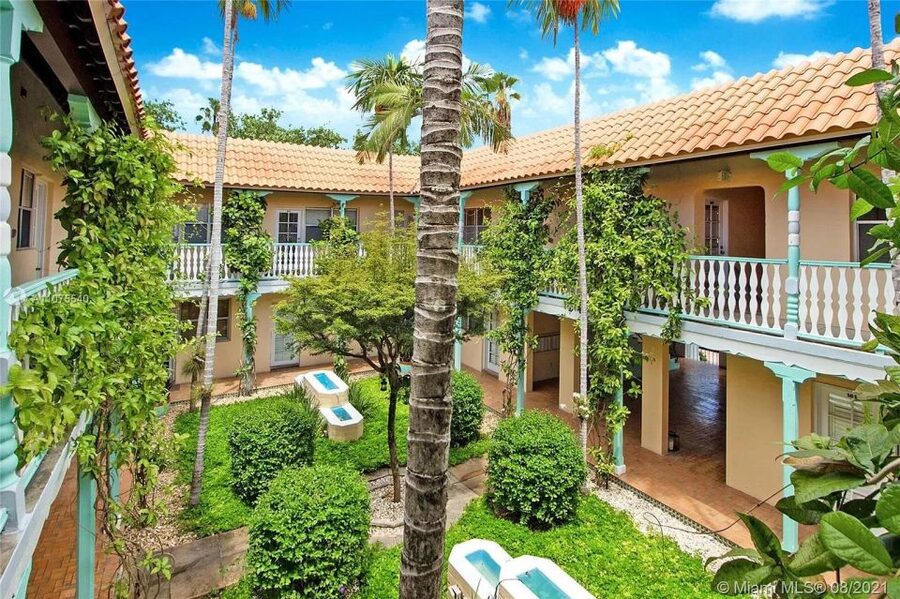
Book it if you want Miami Beach explained as a real city rather than a collection of pastel hotels and nightlife scenes. Damian’s local focus, the Art Deco preservation angle, the route to Surfside and Bal Harbour, and the frank treatment of migration, segregation, crime, and scandal give the ride unusual range.
Skip it if a 20-mile bike route sounds tiring or if you want architecture without crime stories. For everyone else, $79 is a reasonable price for three hours of guided sightseeing, a bicycle, and a much fuller picture of Miami Beach than you will get from a quick walk along Ocean Drive.
FAQ
How long is the Art Deco, History and Crime Bike Tour?
The tour lasts three hours. Starting times vary, so you need to check availability for the date you want.
How much does the tour cost?
The price is $79 per person.
Where does the tour start?
You meet at the bicycle rental shop.
Where does the tour end?
The activity ends back at the meeting point.
Is a bicycle included?
Yes. A bicycle is included with the guided tour.
Is water provided?
Yes. The tour includes a water bottle.
Is a helmet included?
A helmet is included if required.
What language is the tour conducted in?
The live tour is conducted in English.
Which places does the route cover?
The route explores Miami Beach and continues through Surfside and Bal Harbour, with scenic and historic stops along the way.
Can you cancel for a refund?
Yes. You can cancel up to 24 hours in advance for a full refund.
More history and heritage tours in Miami
- Award-winning Art Deco & History Walking Tour in Miami Beach
★ 5.0 · 138 reviews - Miami Small Group Boat Tour: History, Wildlife, and Stiltsville
★ 5.0 · 65 reviews - Miami Beach Food & History Tour In Sobe
★ 5.0 · 49 reviews - Award-winning Art Deco & History Walking Tour
★ 5.0 · 28 reviews
New on the Miami list
- Miami: Wynwood Walls Street Art and Food Walking Tour★ 4.9 · 43 reviews
- Wynwood walking tour in French (2h)★ 4.9 · 9 reviews
- Wynwood Walls Street Art & Neighborhood Walking Tour★ 4.9 · 9 reviews
- Miami: HIDDEN WORLD OF MIAMI DESIGN DISTRICT★ 5.0 · 3 reviews
- Walking Tour with Cocktails(optional) Miami★ 4.9 · 18 reviews
- VIP Walking Tour of Little Havana★ 4.5 · 36 reviews
- Beach Yoga Experience in Miami Beach★ 5.0 · 53 reviews
- Beach Yoga & Tea Experience on South Beach★ 5.0 · 19 reviews
Miami Beach Art Deco Tours, compared.
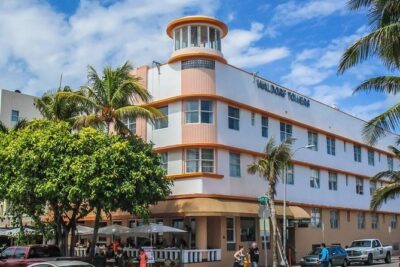
The Official Art Deco Walking Tour by The Miami Design Preservation League
Read our review →
Award-winning Art Deco & Neon Lights Walking Tour in Miami Beach
Read our review →
Award-winning Art Deco & History Walking Tour in Miami Beach
Read our review →Browse the lists this tour appears in