
Reviewed · MIAMI BEACH ART DECO TOURS
Art Deco Tour of South Beach in French
South Beach’s Art Deco district is more than a row of pastel hotels. On this two-hour walk, you’ll connect its polished facades with stories of Prohibition, casinos, and questionable visitors, then see how Ocean Drive, public buildings, and Espanola Way fit into Miami Beach’s larger story. The French-speaking guide Smirna has been praised for her clear French, care, and lively explanations.
I like the small group of up to 10, which gives the guide room to point out details you could easily miss while walking alone. I also like the route’s variety: glamorous Ocean Drive gives way to civic buildings and the Spanish flavor of Espanola Way. The main caution is the weather. The tour runs rain or shine, and South Beach offers little escape from sun, heat, or a sudden shower.
Key points to know before you book
- Two hours on foot: The route covers Ocean Drive, South Beach streets, official buildings, and Espanola Way without taking up your whole day.
- French-speaking guidance: You receive the tour in French, with Smirna among the guides who have led it.
- A group limited to 10: The compact size suits anyone who wants to ask questions and hear the guide clearly.
- Architecture with a scandalous past: The stories include casinos, Prohibition, tourism, and the less polished side of Miami Beach.
- A useful local map: You receive a map marked with favorite spots, followed by a recap email after the tour.
- Prepare for the pavement and sun: Bring water, sunscreen, a hat, and comfortable shoes.
Why this walk makes South Beach easier to understand
South Beach can feel like a visual sugar rush. You see bright walls, rounded corners, porthole windows, neon signs, palm trees, hotels, bars, and the ocean all competing for attention. It is easy to admire the colors without understanding why the buildings look this way.
This tour gives you a framework. You learn to look for the Art Deco district’s repeated ideas rather than treating each building as a separate photograph. Travel, ships, speed, machinery, and the sea all influenced the design. Once the guide points out those patterns, the street becomes much more readable.
I especially like that the experience does not treat architecture as a dry subject. South Beach grew as a holiday destination, but its past also includes Prohibition-era activity, casinos, and visitors who arrived for reasons other than sunbathing. That gives the walk some bite. You are not just studying facades. You are hearing how ambition, entertainment, money, and scandal shaped the district.
The French language also matters here. A good architecture tour depends on small distinctions, anecdotes, and quick exchanges. If French is the language in which you absorb stories most easily, you can focus on the details instead of translating in your head. The guide is also able to explain Miami Beach’s past in a way that feels conversational rather than like a list of dates.
More Art Deco walks on Miami Beach:
- Miami South Beach Art Deco Walking Tour
★ 5.0 · 1,039 reviews - Miami Beach Food and Art Deco Walking Tour
★ 4.5 · 245 reviews - Miami Beach Art Deco Tour with Cocktails
★ 5.0 · 153 reviews
Meeting at Ocean Drive beside Barbara Capitman
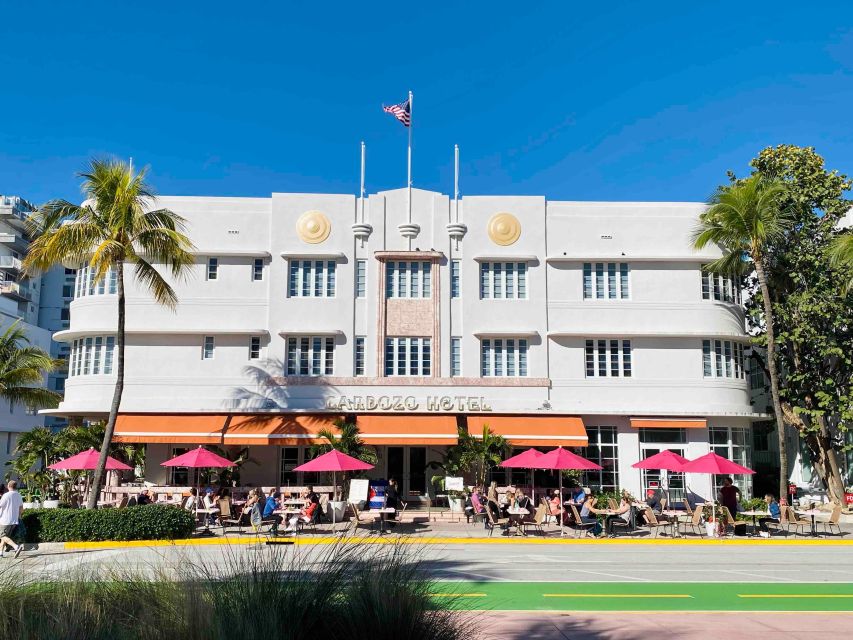
The meeting point is across the street from the Cardozo Hotel, beside the statue of Barbara Capitman. This is a fitting place to begin because you are already in the middle of South Beach’s famous Art Deco setting.
Barbara Capitman is closely associated with the preservation of Miami Beach’s Art Deco district, so the statue gives the opening a useful sense of place. You do not need to begin in a museum or an out-of-the-way neighborhood. The route starts where the city’s visual identity is immediately around you.
Arrive ready to walk. The tour lasts two hours, and the supplied guidance specifically calls for comfortable shoes, water, sunscreen, and a hat. That is not packing advice to ignore in Miami. Even a short walk can feel demanding when the pavement is hot and the sun is strong.
The tour is wheelchair accessible, which makes this route more practical for many visitors. Still, a sunny urban walk is different from an indoor visit, so plan your clothing and water supply with comfort in mind.
Ocean Drive, where Miami Beach puts on a show
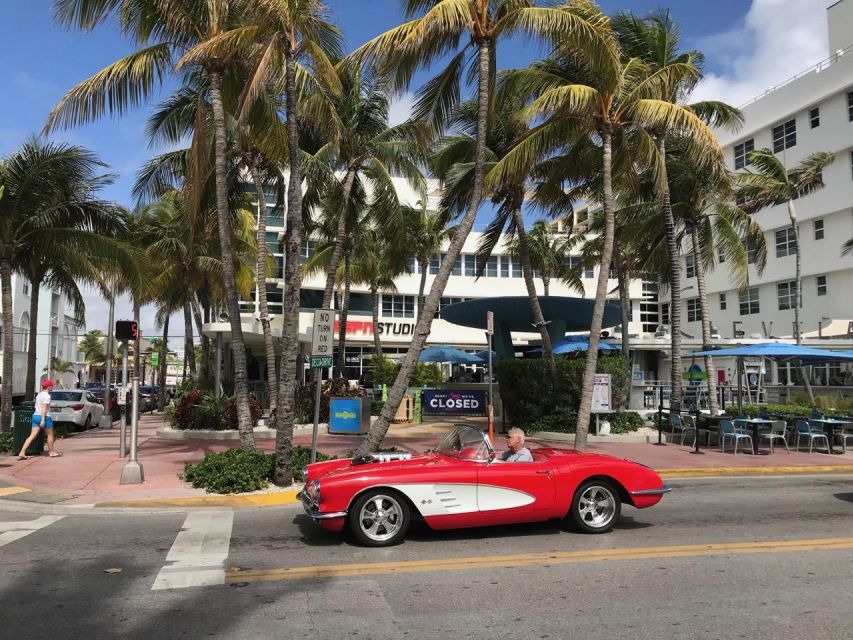
Ocean Drive is the obvious starting point, but it earns its place. This street gathers much of what people picture when they hear Miami Beach: the beach, hotels, bars, luxury, nightlife, and a steady display of architecture.
The guide helps you move past the postcard view. Look for the features that make Art Deco buildings recognizable, including rounded forms, strong horizontal lines, decorative details, and references to travel and the sea. The tour asks you to notice those themes rather than simply photograph a pastel facade.
Ocean Drive can be visually crowded. Cars, pedestrians, music, signs, and restaurant activity all compete with the buildings. That is part of the street’s character, but it can also make it harder to concentrate. A guide is useful here because you do not have to decide which details matter while the scene keeps moving around you.
The street also shows how architecture can become a public image. Hotels and restaurants are not only buildings in this setting. They help sell Miami Beach as a place of leisure, glamour, and escape. The guide’s anecdotes connect that polished image to the people and businesses that helped create it.
If you want quiet architectural study, Ocean Drive may feel busy. If you want to understand why South Beach became famous, it is essential. I would bring a phone or camera, but keep it away long enough to listen. The best details are often above eye level or tucked beside the obvious signs.
Cruising South Beach on foot, looking for sea and travel motifs
The next part of the route moves through South Beach, where the Art Deco style reveals its fascination with movement. Themes of ships, ocean travel, aviation, and modern speed appear in the district’s visual language.
You may find nautical references in curved windows, railings, facade details, and streamlined shapes. The pleasure comes from learning how to spot them for yourself. Instead of being told that a building is attractive, you are given a way to read its design.
This is also where the tour’s small size has practical value. With no more than 10 participants, the guide can stop and indicate a detail without needing to shout to a large crowd. You can ask why a particular shape was used or how it relates to the period’s ideas about travel and progress.
The route is not presented as a formal architectural lecture. The strongest part is the link between design and daily life. Miami Beach wanted to look modern, exciting, and different from older American cities. The buildings helped make that promise visible.
Do not expect a long indoor museum visit or a deep technical lesson in architectural terminology. This is an outdoor introduction shaped by stories and observation. For most people, that is the right balance for a two-hour walk, especially if you are fitting it between beach time, meals, or other Miami plans.
More days out along Miami Beach and South Beach:
- Miami: Half-Day Open-Top Bus Tour Plus Biscayne Bay Cruise
★ 4.1 · 2,420 reviews - South Beach Cultural Food and Walking Tour
★ 5.0 · 1,284 reviews - A Taste of South Beach Food Tour
★ 5.0 · 1,120 reviews - Miami: South Beach Private 50-Minute Private Flight Tour
★ 4.8 · 941 reviews
Casinos, Prohibition, and the less polite side of paradise
The subject turns darker when the tour reaches Miami Beach’s casino and Prohibition-era connections. This is where the district’s cheerful surface meets its more scandalous past.
Miami Beach has long attracted people looking for leisure and escape, but not every visitor came only for the sand. The tour uses casinos and Prohibition to show that resort towns can have complicated reputations. Behind the hotels and bright signs were businesses, habits, and social worlds that did not always match the respectable image presented to the public.
I like this section because it keeps the architecture from becoming decorative wallpaper. A building can look playful and clean while being tied to stories of gambling, drinking, business deals, or attempts to control public behavior. Those contrasts make South Beach more interesting than a simple collection of pretty facades.
The exact stories will depend on the guide’s presentation, but the theme is clear: Miami Beach’s identity was built through entertainment as much as through planning. You hear about the people who came, the businesses that served them, and the ways the district gained its reputation.
This portion should appeal to anyone who enjoys social history. If your interest is strictly in color schemes and building dates, you may prefer a shorter self-guided walk. For me, the mixture of architecture and scandal gives the tour its personality.
Miami Beach’s official buildings and the joy of small details
The route also includes official buildings in Miami Beach. These may not have the immediate glamour of Ocean Drive’s hotels, but they show that the district’s design language reached into ordinary public life.
The guide points out elegant or grand facades on civic buildings and explains how even practical places were given a sense of style. One memorable idea is that buying a stamp can become a small trip through time. That is a good reminder that architectural history is not limited to grand monuments.
Public buildings matter because they show how widely a city embraced an idea. If only private hotels used Art Deco design, you could dismiss it as a marketing trick. When official buildings adopt related forms, the style becomes part of the city’s public identity.
This section also gives the walk a welcome change of pace. Ocean Drive is theatrical. Civic architecture is more restrained, but it can reveal how Miami Beach wanted residents and visitors to see the city as organized, modern, and confident.
Keep an eye on entrances, signs, windows, and decorative elements. The point is not to rush from one famous facade to another. The guide helps you notice how design choices appear in places you might otherwise pass without a second look.
Espanola Way, a small Spanish turn in South Beach
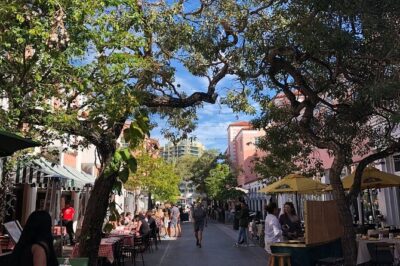
Espanola Way gives the route a different mood. Known as the Spanish Village, it brings Mediterranean architecture, tapas restaurants, and a European atmosphere into the center of South Beach.
The change is useful after the broad spectacle of Ocean Drive. Instead of a long beachfront avenue lined with hotels, you get a more intimate setting with a distinctly Spanish flavor. The tour uses it to show that Miami Beach’s identity is not limited to one architectural style or one version of glamour.
The Madrid comparison gives this stop an easy hook. You are not actually leaving Florida, of course, but the design and restaurant atmosphere create a little European reference point within Miami Beach. It is a good place to understand how the district has borrowed from different cultures to build its own image.
Espanola Way may be especially appealing if you want a stop that combines architecture with food and atmosphere. Drinks and personal purchases are not included, so budget separately if you want to linger for tapas or order something along the way. The tour itself remains a guided walk, not a meal.
I would not expect this stop to replace a full Spanish cultural experience. Its value is more modest and more local: it shows how Miami Beach assembled a mix of influences and made them part of the city’s appeal.
What the French-language format adds
This is a French-language tour, not simply a standard walk with a few translated phrases. That matters if you prefer to ask questions, follow anecdotes, and catch humor without switching languages.
The strongest praise for the guiding has centered on clear French, detailed explanations, warmth, and care. Smirna has been singled out by name as an excellent guide, and the comments about her suggest a style that is attentive rather than rushed. The French-speaking guide is also expected to send a recap email after the tour, which is useful if you want to remember building names or revisit a point later.
Because the tour is limited to 10 people, you have a better chance of hearing the guide and getting a personal response. Small groups do not guarantee a perfect experience, but they make this kind of architecture walk more manageable than a large procession.
The route is also suitable for people who already know Miami Beach. You might recognize Ocean Drive, but the guide can add context to places you have already seen. That is often the best use of a city tour: not taking you only to places you would never find, but making familiar streets more legible.
Is $55 a fair price for two hours?
At $55 per person, this is not the cheapest way to walk around South Beach. You can see Ocean Drive for free, and you can photograph many Art Deco buildings without paying anyone.
The value comes from interpretation. You are paying for two hours of French guidance, a small group capped at 10, architectural context, stories about Prohibition and casinos, a map of favorite spots, and a follow-up recap email. If you would otherwise wander without knowing what to look for, the guide can make the district much more rewarding.
The price is easier to justify for French-speaking visitors who want a tour in their first language. It is also a sensible choice if you have limited time and want a clear route through several parts of South Beach instead of researching them yourself.
It is less compelling if you dislike guided walks, already know the district well, or plan to spend only a few minutes around Ocean Drive. In that case, a self-guided stroll may be enough. For someone interested in architecture and local stories, $55 is a fair mid-range price, provided the heat and two hours on foot are not a problem.
Practical advice for a comfortable walk
Wear shoes that can handle two hours of city walking. Bring water, sunscreen, and a hat, and dress for strong sun. The route takes place rain or shine, so a light rain layer may be sensible if the forecast looks uncertain.
The tour is wheelchair accessible, and the small group can make communication easier. The meeting point is across from the Cardozo Hotel beside Barbara Capitman’s statue, so use that landmark rather than relying only on a street address.
Drinks and personal purchases are not included. That is easy to manage, but remember it if you plan to buy refreshments at Espanola Way or stop for something along the route.
Free cancellation is available up to 24 hours before the start for a full refund. You can also reserve and pay later, which helps if your Miami schedule is still changing.
Who should book this South Beach walk?
I would recommend this experience to French-speaking visitors who want more than photographs of pastel hotels. It fits couples, solo visitors, families with older children, and anyone who likes architecture with a strong dose of social history.
It is particularly useful early in a Miami Beach stay. The map and favorite spots can help you plan later walks, meals, and return visits. You will recognize the Art Deco details more easily after the guide has shown you what to notice.
I would be cautious about booking it at the hottest part of the day if you struggle with sun or humidity. The tour is only two hours, but the outdoor setting and rain-or-shine policy make weather a real consideration.
Should you book it?
Book this tour if you want French-language storytelling, a small group, and an easy-to-follow route through South Beach’s architecture and past. The best parts are the links between design, travel, casinos, Prohibition, public buildings, and Espanola Way.
Skip it if you only want a quick photo walk or prefer to explore without a guide. At $55, the tour earns its price through context and personal explanation, not through admission to a major attraction. For a French-speaking visitor who wants to understand why South Beach looks and feels the way it does, that is a useful trade.
FAQ
How long does the Art Deco tour of South Beach last?
The tour lasts two hours.
What language is the tour conducted in?
The tour is conducted in French with a live French-speaking guide.
How many people can join the tour?
The group is limited to 10 participants.
Where does the tour meet?
The guide meets you across the street from the Cardozo Hotel, next to the statue of Barbara Capitman.
Is the tour wheelchair accessible?
Yes, the tour is wheelchair accessible.
What should I bring?
Bring sunscreen, water, a hat, and comfortable shoes.
Does the tour operate in bad weather?
Yes, the tour takes place rain or shine.
What is included in the price?
The price includes the guided walking tour, a French-speaking guide, a map showing favorite spots, and a recap email after the tour. Drinks and personal purchases are not included.
New on the Miami Beach list
- Beach Yoga Experience in Miami Beach★ 5.0 · 53 reviews
- Beach Yoga & Tea Experience on South Beach★ 5.0 · 19 reviews
- Island Fun Yacht Rental in Miami Beach★ 5.0 · 21 reviews
- Electric Bike Tour in South Beach★ 5.0 · 11 reviews
- Private Golf Cart Tour of Miami Beach★ 5.0 · 8 reviews
- Miami Beach Paddleboard Rental with Instruction★ 3.5 · 7 reviews
- Transfers from Miami Airport to any Miami and Miami Beach area★ 5.0 · 12 reviews
- Miami Beach: Luxury Private 50-min Airplane Tour★ 5.0 · 16 reviews
Miami Beach Art Deco Tours, compared.
The Official Art Deco Walking Tour by The Miami Design Preservation League
Read our review →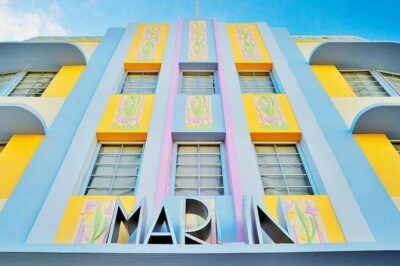

Award-winning Art Deco & Neon Lights Walking Tour in Miami Beach
Read our review →
Award-winning Art Deco & History Walking Tour in Miami Beach
Read our review →Browse the lists this tour appears in