
Reviewed · LITTLE HAVANA TOURS
Cigar Factory Tour in Little Havana, Miami
The most interesting part of this Little Havana experience is its close look at a working cigar shop, not a polished museum display. At Casa Habano, René explains how tobacco moves from seed and leaf to finished cigar, then brings you near the rollers as they twist, bind, press, and shape each one by hand. Cuban coffee and pastries get the visit off to a friendly start.
I like the clear connection between cigar making and Cuban immigration in Florida, and I like that you can feel and smell different tobacco leaves instead of only watching a video. The included cigar is a useful bonus, especially at $35 per person. The main consideration is that this is a real working facility with a simple setup, and the tobacco, coffee, and smoke may not suit anyone with allergies or strong sensitivities.
Key points to know before you book
- See every major production stage: Learn about seeding, curing, fermentation, sorting, deveining, rolling, aging, and packing.
- Meet René at Casa Habano: The owner leads the visit and explains both cigar craft and Little Havana history.
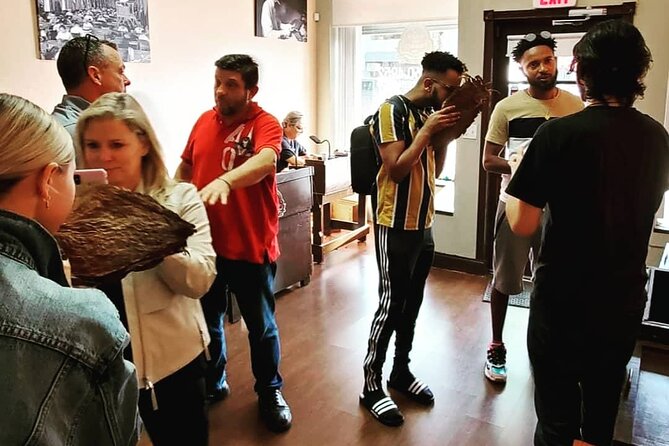
- Handle real tobacco leaves: You can look closely at different leaves and feel and smell the material used in premium cigars.
- Enjoy Cuban hospitality: Café Cubano, pastries, and snacks are included during the visit.
- Take home one cigar: Each person receives a complimentary cigar, with more available for purchase.
- Expect a small, practical setting: The group is capped at 10 people, and closed shoes are recommended.
A working cigar shop on Calle Ocho
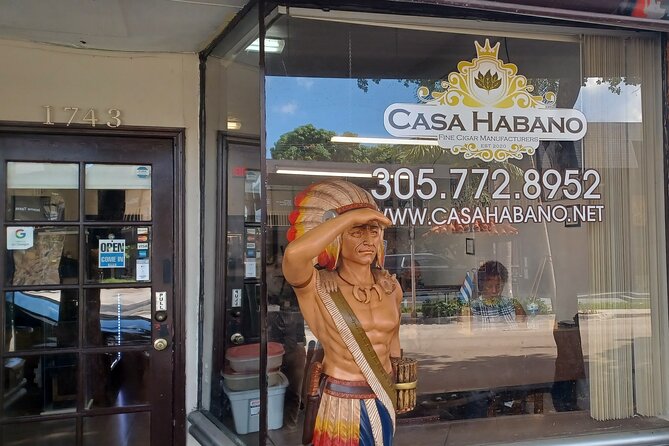
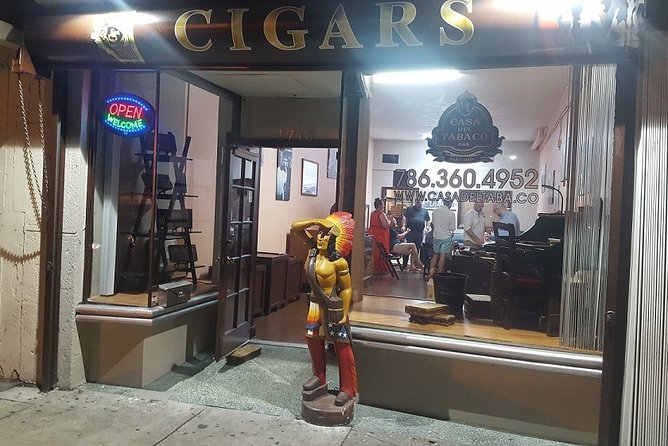
Casa Habano sits at 1743 SW 8th Street, in the heart of Miami’s Little Havana. The tour begins and ends at this address, making it easy to fit into a longer afternoon exploring Calle Ocho.
This is not a grand factory with large machines and viewing galleries. It is a family-owned cigar operation where the work is done by hand. That matters because you are close to the people making the cigars, rather than watching a production line from behind glass.
The small scale also helps the tour feel personal. With a maximum of 10 people, René can answer questions and spend time explaining details. The experience is offered in English and lasts about one hour, so it works well as one stop during a Little Havana visit rather than as a full-day commitment.
I would arrive ready for an informal presentation. The space has a working-shop feel, which is part of its appeal, but anyone expecting a sleek visitor center may find it plain. The setting is best understood as a place where cigars are actually made and sold.
More Little Havana walks and food stops:
- Little Havana Food and Walking Tour in Miami
★ 5.0 · 8,882 reviews - Miami: Little Havana Food Walking Tour with Tastings
★ 4.9 · 1,181 reviews - Little Havana: Authentic Food and Culture Walking Tour
★ 5.0 · 679 reviews
Start with Café Cubano and the tobacco story
The visit opens with a traditional Cuban coffee, or Café Cubano. Pastries and snacks are also provided, giving you a small taste of the hospitality that shapes the experience. The food is not the main reason to book, but it makes the opening feel generous and gives the first part of the talk a relaxed pace.
Before you see the rollers at work, a video covers the early stages of tobacco production. You learn about seeding, germination, planting, curing, fermenting, and sorting. This is useful because a finished cigar can look simple, while the leaf has already gone through a long chain of careful work before it reaches the factory.
The farming section is one of the better reasons for non-smokers to come along. You do not need to know cigar terms at the start. The visit begins with the plant and the agricultural process, then moves toward manufacturing. That order gives you a basic map for everything that follows.
The video portion does mean that the tour is not action from beginning to end. If you want only to watch hand rolling, the opening presentation may feel slow. I think it earns its place because it explains why different leaves have different roles and why curing and fermentation affect the final cigar.
How Cuban immigrants shaped Florida’s cigar trade
René also places cigar making in the story of Florida. Commercial cigar rolling in the state began with small operations run by Cuban immigrants in the 1830s. The talk then moves to the growth of Florida’s cigar industry and the figures who helped build its reputation, including Vicente Martinez Ybor and Eduardo Manrara.
This section adds much more than a technical lesson. It links cigar making to migration, business, and Cuban culture in Florida. If you are already exploring Little Havana, the connection makes sense: the cigar is not simply a souvenir, but part of the wider Cuban influence on Miami and the state.
The historical discussion is presented in a personal way, with René’s passion for the trade shaping the tone. The emphasis is on the people, skills, and traditions behind the product. You can ask questions as the tour moves along, which is helpful if terms such as wrapper, binder, or filler are new to you.
The history section may be most rewarding for people interested in culture, agriculture, and immigration. A cigar enthusiast will already have plenty to examine later in the tour, but someone who does not smoke can still find a clear reason to pay attention here.
Enter the galera and handle the tobacco
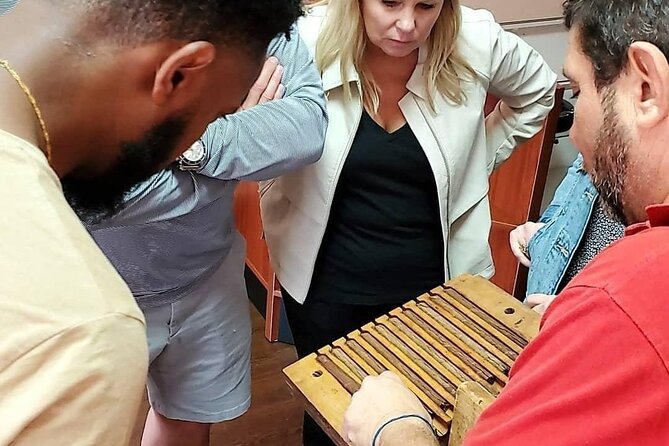
The next part takes you into the galera, the cigar-making area. Here, the focus shifts from explanation to the physical material. You see several types of tobacco and learn how the leaves are sorted and aged.
This is where the tour becomes more sensory. You can look at the leaves up close and, according to the activity format, feel and smell them. That direct contact helps explain why cigar making is a craft rather than a simple act of wrapping tobacco into a tube.
Aging is an important part of the process. The leaves are not treated as interchangeable pieces. They are sorted according to their qualities and used in different ways. The guide explains how the parts work together to produce flavor and aroma.
I like this stage because it slows down the process. You are not just told that cigars use different tobacco. You get a chance to see the material and understand that leaf selection is part of the maker’s judgment.
The work area may include tobacco odors and cigar smoke. The experience is not recommended for people with allergies, so keep that in mind before booking. Closed shoes are also advised for safety.
A different kind of day out in Miami altogether:
- From Miami: Everglades Airboat, Wildlife Show & Bus Transfer
★ 4.2 · 8,622 reviews - Miami: Biscayne Bay Millionaire’s Homes Sightseeing Cruise
★ 4.5 · 7,348 reviews - Miami: Everglades National Park Airboat Tour & Wildlife Show
★ 4.5 · 7,296 reviews - Miami: Hop-on Hop-off Open-top Bus Tour and Optional Cruise
★ 4.1 · 3,077 reviews
Watch the rollers twist, bind, press, and shape
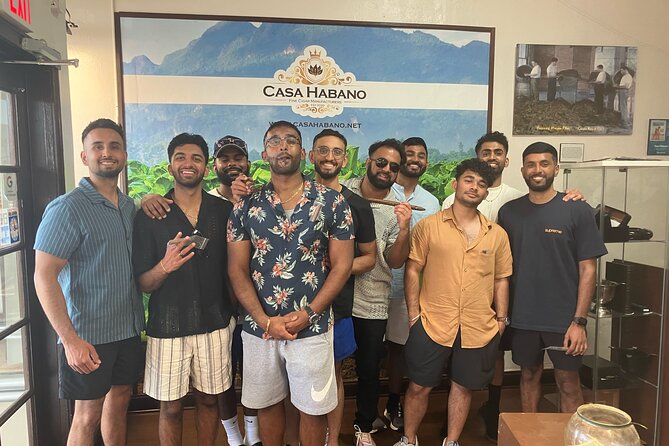
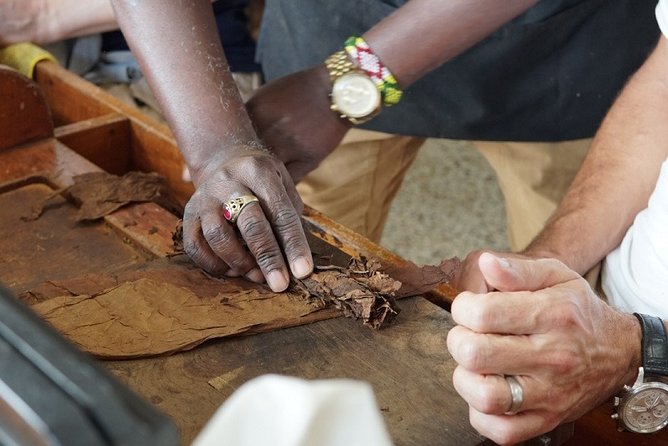
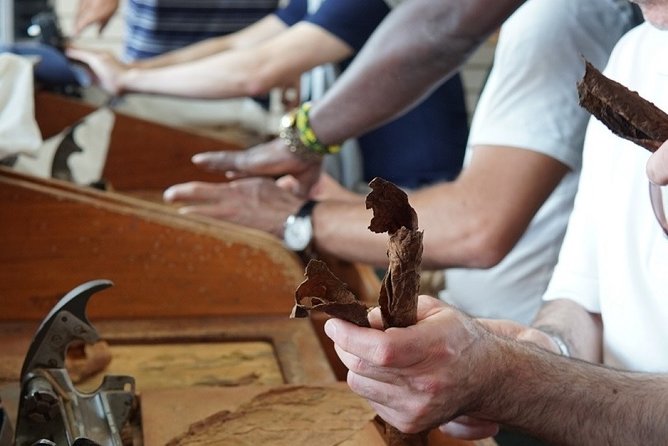
The highlight for most people is watching the master torcedores hand-roll cigars. Constructing a cigar is described as a three-step process, with the roller twisting, binding, pressing, and rolling the tobacco into its final form.
The work is close enough to reveal the skill involved. The hands move with speed and control, but the process is not rushed for show. You can see how the filler is arranged, how the binder holds the cigar together, and how the outer leaf is applied.
This is also the point where the value of a handmade cigar becomes easier to understand. The price of a finished cigar reflects time, judgment, and consistency, not just tobacco. Watching an experienced roller work gives you a better basis for deciding what kind of cigar you might want to buy later.
The visit has an especially nice angle for couples and families with mixed interests. A cigar smoker can focus on construction and flavor, while someone new to cigars can watch a skilled craftsperson and ask basic questions without needing prior knowledge.
Several of the workers have decades of combined experience, and that shows in the care given to the task. The point is not to turn every visitor into a cigar expert in an hour. It is to help you notice the precision that goes into a product often treated as a simple luxury item.
What happens after the cigar is rolled
The final production stage is packing, but the cigar’s journey does not end when the rolling is finished. The cigars undergo further aging before they are labeled and packaged for distribution.
That extra step is easy to overlook. The tour makes clear that a cigar can require patience at more than one point in its life. The leaf is cured and fermented before rolling, and the finished cigar may then rest again before it reaches the customer.
This is a useful detail if you plan to buy cigars at the shop. You will have a better idea why different cigars may vary in flavor, price, and age. The staff can also explain the products available, though the main activity is the tour rather than a formal tasting session.
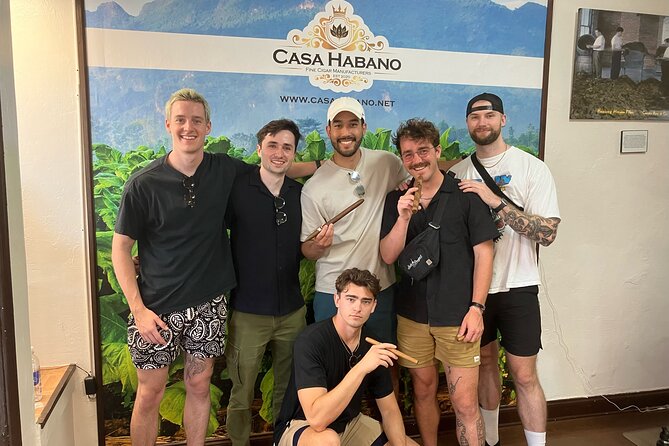
At the end, each person receives one complimentary cigar. It is a small but meaningful souvenir because it comes from the same kind of handwork you have just watched. If you enjoy it, the shop offers the chance to purchase additional cigars.
The included cigar adds real value to the $35 price. Even if you do not smoke, it gives you a physical reminder of the visit. If you do smoke, you can use it as a first sample of Casa Habano’s work.
Is $35 a fair price?
At $35 per person, this is a reasonable short activity if you value personal instruction and a behind-the-scenes setting. The price covers about an hour with René, the tobacco presentation, the production demonstration, Cuban coffee, pastries and snacks, and one cigar.
The strongest value comes from the access. You are not only looking at packaged cigars in a shop. You are shown the steps from tobacco production through rolling and packing, and you can ask questions in a small group.
The value is less obvious if you are searching for a large museum, an extended tasting, or a full tour of tobacco farms. Those are not part of this activity. The focus is a compact education in cigar making at a Little Havana business.
I would also factor in the setting. The shop is functional rather than fancy. That may sound like a drawback, but it is also why the experience feels authentic. You see a place where work is happening, not a set built only for visitors.
The complimentary cigar makes the price easier to justify for smokers. For non-smokers, the history, agriculture, and handcraft sections need to be the main attraction. Fortunately, the tour gives those subjects enough attention to make the visit worthwhile even if you never light the cigar.
Who will enjoy Casa Habano most?
This is a strong fit for cigar smokers who want to understand how a premium hand-rolled cigar is made. You will see the raw leaves, learn the vocabulary, watch the rollers, and have a chance to buy more cigars afterward.
It also suits people who enjoy cultural history. The connection between Cuban immigrants, Florida’s cigar industry, and Little Havana gives the activity more substance than a basic shop demonstration.
Families can book it too, especially if older children or adults are interested in crafts, agriculture, or Miami history. Adults are preferred, and the activity may not be a good choice for people with allergies.
I would recommend it for a partner who does not smoke but wants to share an experience with someone who does. The coffee, snacks, stories, and handwork provide more to see than a simple cigar purchase.
It is less suitable if you dislike tobacco environments or want a quiet, smoke-free activity. You should also choose closed shoes, as recommended for safety.
Timing, meeting point, and cancellation
The tour begins at 1743 SW 8th Street, Miami, Florida 33135, and returns to the same meeting point. It is near public transportation, so you can combine it with other stops in Little Havana.
The activity lasts about one hour. Since it is short, you can place it between a meal and other Calle Ocho stops, but allow enough time to find the address and arrive before the start.
Mobile tickets are accepted, and confirmation is provided when you book. Service animals are allowed, and most people can take part, subject to the tobacco and safety considerations already noted.
Free cancellation is available if you cancel at least 24 hours before the start time. Cancellations or changes made within 24 hours are not refunded or accepted, and the cutoff follows Miami local time.
Should you book this Little Havana cigar tour?
Book it if you want a small, personal look at cigar making rather than a polished attraction. René’s warm presentation, the agricultural background, the close view of hand rolling, and the included cigar make this a well-rounded one-hour stop.
I especially recommend it for cigar fans, people curious about Cuban culture in Florida, and anyone who enjoys seeing skilled handwork up close. The visit also works for a mixed group because the history and farming sections do not require cigar experience.
Skip it if tobacco smoke or tobacco scents are a problem, or if you expect a large factory with extensive machinery. Casa Habano offers something more direct: a working shop, a passionate host, a few snacks, and a clear look at how a cigar is made from leaf to finished product.
FAQ
How long does the Casa Habano cigar tour last?
The tour lasts approximately one hour and ends back at the meeting point.
Where does the tour begin?
It begins at Casa Habano, located at 1743 SW 8th Street, Miami, Florida 33135.
Is the tour offered in English?
Yes. The experience is offered in English.
What is included with the tour?
You receive Cuban coffee, pastries, snacks, and one complimentary cigar. The visit also includes instruction about tobacco production and cigar making.
Can I buy additional cigars?
Yes. Additional cigars are available for purchase at the shop.
Is the tour suitable for people who do not smoke?
Yes, most people can participate, and the tour includes agriculture, history, and handcraft. However, it is not recommended for people with allergies or strong sensitivities to tobacco.
What is the cancellation policy?
You can cancel for a full refund up to 24 hours before the experience begins. Cancellations or changes made less than 24 hours before the start time are not refunded or accepted.
New on the Miami list
- Miami: Wynwood Walls Street Art and Food Walking Tour★ 4.9 · 43 reviews
- Wynwood walking tour in French (2h)★ 4.9 · 9 reviews
- Wynwood Walls Street Art & Neighborhood Walking Tour★ 4.9 · 9 reviews
- Miami: HIDDEN WORLD OF MIAMI DESIGN DISTRICT★ 5.0 · 3 reviews
- Walking Tour with Cocktails(optional) Miami★ 4.9 · 18 reviews
- VIP Walking Tour of Little Havana★ 4.5 · 36 reviews
- Beach Yoga Experience in Miami Beach★ 5.0 · 53 reviews
- Beach Yoga & Tea Experience on South Beach★ 5.0 · 19 reviews
Little Havana Tours, compared.
Little Havana Food Walking Tour with Tastings
Read our review →
Walking Food Tour of Little Havana with Cuban Dishes Tasting
Read our review →
Little Havana Food Tour: Discover Iconic Cuban Cuisine in Miami
Read our review →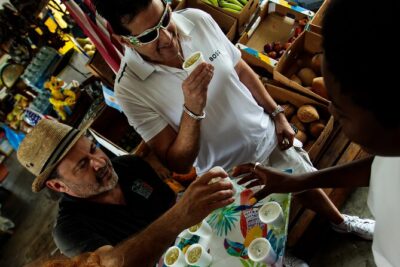
Little Havana Like a Local: Food, Culture & Hidden Gems
Read our review →
Browse the lists this tour appears in