
Reviewed · MIAMI WALKING TOURS
Hidden Gems of Downtown Miami Guided Walking Tour
Miami’s story comes into focus along the Miami River, where Tequesta people lived long before luxury towers, cruise ships, and glass office blocks filled the view. This two-hour walk connects that early past with Gesu Church, Freedom Tower, and the Olympia Theater, giving you more than a quick look at downtown streets.
I like the small maximum of 10 people, which should make it easier to hear the guide and ask questions. I also like the strong architecture focus, from Masonry Vernacular and Mediterranean Revival buildings to the futuristic Miami Bull and Miami Tower. The main drawback is pace: ten stops in about two hours means some places receive only five minutes, and the route requires steady walking in Miami’s heat.
Key points to know before you go
- The Miami River gives the tour its historical anchor: You begin at the place tied to Miami’s earliest human history, not just at a modern shopping district.
- The historic district gets the most time: Forty minutes are set aside for downtown buildings, including the Ingraham Building, Alfred I. Dupont Building, Seybold Building, and Gesu Church.
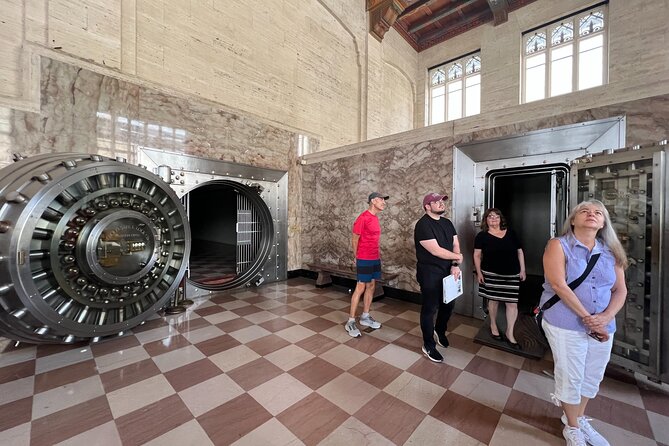
- You may enter historic buildings and skyscraper spaces: The tour includes access to places that are easy to miss when walking downtown alone.
- A Cuban cafecito is included: You stop at a local ventanita for coffee or tea along the route.
- The route ends with modern Miami: Miami Worldcenter, Maurice A. Ferré Park, the museums, waterfront, and Freedom Tower show how quickly the city has changed.
- The group is kept small: No more than 10 people are allowed, and the tour is offered in English at 10 a.m.
Miami’s story begins beside the river

Meet at 315 South Biscayne Boulevard at 10 a.m. The first stop is the Miami Riverwalk Trail, where the tour sets up the city’s story before moving into its better-known buildings.
The river is important because Miami did not begin with the skyline. The area was home to the Tequesta, who hunted and gathered here more than 8,000 years ago. Your guide places that early human presence beside the city you see today: residential towers, hotels, restaurants, and international business offices.
I like this opening because it gives the rest of the walk a useful frame. Instead of treating downtown as a collection of unrelated photo stops, you can watch Miami change from a small settlement into a major financial and cultural center.
The river section lasts about 10 minutes and has no admission charge. It is brief, so do not expect a long nature walk or a detailed archaeological visit. The value is in the explanation and the contrast between the river’s old role and the polished city around it.
More walking tours in Miami:
- Little Havana Food and Walking Tour in Miami
★ 5.0 · 8,882 reviews - The Official Art Deco Walking Tour by The Miami Design Preservation League
★ 5.0 · 1,580 reviews - South Beach Cultural Food and Walking Tour
★ 5.0 · 1,284 reviews
Miami Tower and the city’s love of colored light
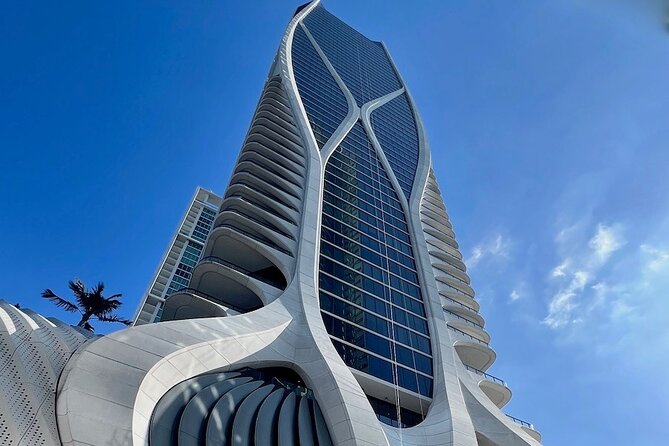
The next stop is Miami Tower, a recognizable downtown skyscraper with a tiered glass exterior. It was the first Miami building to use dramatic colored lighting in this way, helping set off a trend that later reached bridges and other private buildings around the city.
The tour also takes you to a garden and park within the tower’s skydeck area. That is a useful detail for anyone who has already seen Miami’s skyline from street level. You get a look at a quieter space inside one of the city’s most recognizable modern structures.
This stop lasts about 10 minutes. It is not a long architectural lecture, but it gives you a quick way to understand how Miami uses buildings as part of its nighttime identity. The colorful skyline is not accidental decoration. It became part of the city’s public image.
Forty minutes in the Downtown Miami Historic District
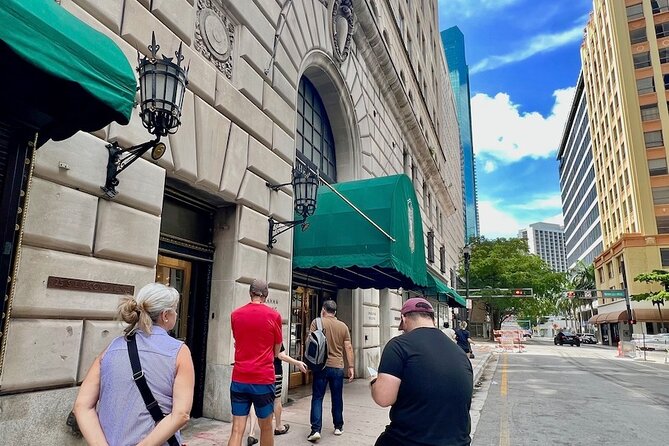
The heart of the tour is the Downtown Miami Historic District, with about 40 minutes devoted to its buildings and streets. That is the longest single section of the route, and for good reason. Miami’s early commercial and residential center took shape here during the Florida Land Boom of the 1920s.
You will see several architectural styles in a compact area:
- Masonry Vernacular, a practical local style using masonry construction
- Mediterranean Revival, with details that recall Spanish and Mediterranean buildings
- Art Moderne, known for streamlined 20th-century design
- Neoclassical Revival, with formal proportions and classical details
The point is not just to name styles. A good guide helps you notice how each one reflects a different stage in Miami’s growth. The district includes 60 historic buildings listed on the National Register of Historic Places, and the tour offers access to several of them.
Possible stops include the Ingraham Building, Alfred I. Dupont Building, Seybold Building, and Gesu Church. The exact stops can change, so you should treat this as a guided introduction rather than a fixed promise that every building will receive equal attention.
This is where the tour’s small group matters most. Architecture is easy to miss when you are walking alone, especially in a downtown area where older buildings sit beside newer towers. The guide can point out details at street level and explain why a plain-looking facade matters.
A past tour led by Kim received especially strong praise for its city history and architecture focus. If Kim is your guide, you can expect that architectural connections will be a major part of the experience. Guide assignments can vary, so the practical takeaway is to book this tour if you want interpretation, not just a route to follow.
A quick look at the Miami Bull
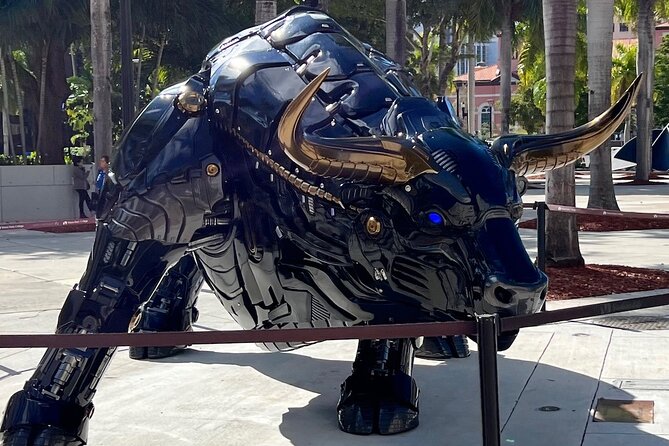
The Miami Bull takes only about five minutes, but it brings the tour sharply into the present. The sculpture is designed as a futuristic symbol of modern finance and combines traditional sculpting, digital methods, hand fabrication, and 3D printing.
Its Transformers-like appearance makes it an obvious photo stop. It also fits the tour’s larger theme: Miami often turns business, technology, and spectacle into public art.
Do not expect a long stop here. The sculpture works best as a visual pause between the historic district and the older religious and entertainment landmarks that follow.
A different kind of day out in Miami altogether:
- From Miami: Everglades Airboat, Wildlife Show & Bus Transfer
★ 4.2 · 8,622 reviews - Miami: Biscayne Bay Millionaire’s Homes Sightseeing Cruise
★ 4.5 · 7,348 reviews - Miami: Everglades National Park Airboat Tour & Wildlife Show
★ 4.5 · 7,296 reviews - Miami: Hop-on Hop-off Open-top Bus Tour and Optional Cruise
★ 4.1 · 3,077 reviews
Gesu Church and Miami’s Catholic past
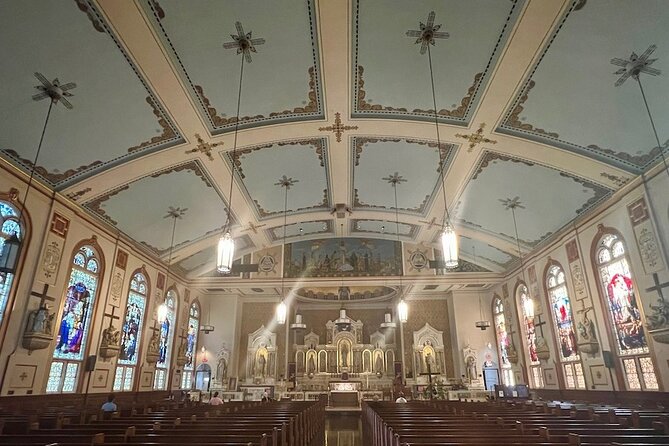
Gesu Catholic Church is one of the most meaningful stops on the route. It is considered the oldest building in Miami still standing on its original site and is also the city’s oldest Roman Catholic parish.
The church’s Mediterranean Revival design and restored interior details give you a chance to see an older Miami that is easy to overlook among offices and commercial blocks. It is listed on the National Register of Historic Places and has been restored to its original appearance.
The scheduled visit lasts about five minutes, so the guide’s explanation is important. You are not getting a full church tour or a long quiet visit. Instead, you receive a concentrated look at the building’s role in the city’s religious and civic story.
For me, this is one of the stops that makes the tour worthwhile. A modern skyline can tell you that a city has money. A surviving parish church tells you that people put down roots here long before today’s development boom.
Olympia Theater and Miami’s show-business past
The Olympia Theater opened in the early 1920s as a silent movie theater and vaudeville house. Its Mediterranean Revival design makes it a visual highlight, while its performance history adds another layer.
The theater has hosted major figures including Elvis, Pavarotti, Desi Arnaz, and Ella Fitzgerald. Even with only five minutes at the stop, those names help you picture the building as a major entertainment venue rather than simply an attractive old facade.
The short timing is again the main limitation. This is a story stop, not a full performance venue visit. If you want to explore the theater in detail, ask the guide what access is available that day and keep in mind that the route may change.
Still, the theater fits neatly into the walk’s central idea. Miami’s identity was built not only through finance and real estate, but also through music, film, stage shows, and popular culture.
The International Jewelry District and Seybold Building
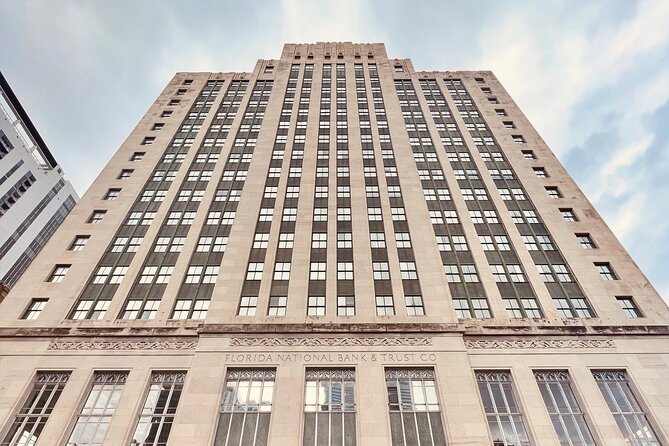
The Miami International Jewelry District covers a four-block area with more than 500 jewelry stores. The tour visits the Seybold Building, a well-known part of the district where customers shop for custom jewelry and watches.
This is a useful change of pace after the historic architecture stops. You move from civic buildings and theaters into a commercial district with a more specialized role in Miami’s economy.
The visit lasts about five minutes, so the tour is not designed for serious shopping. It gives you a quick look at a business center many people would miss if they stayed near the waterfront or shopping malls. If you are interested in jewelry, watches, or custom design, you may want to return on your own after the walk, since the guided stop is brief.
Modern Miami at Miami Worldcenter
Miami Worldcenter shows the city’s newer direction. This large urban development covers more than 20 acres and represents a $4 billion mix of retail and residential construction.
The tour spends about 10 minutes here. You see a very different Miami from the one represented by Gesu Church or Olympia Theater: large-scale development, new homes, retail space, and a planned urban setting.
This stop helps explain why downtown continues to change so quickly. It also provides a useful warning about the tour’s character. You will see major projects and hear how the city has developed, but you will not have time to explore the complex fully.
The end point is in Park West, within Miami Worldcenter. That makes the stop practical as well as informative, since you finish close to a modern downtown district rather than returning to the starting point.
Waterfront views at Maurice A. Ferré Park
Maurice A. Ferré Park gets about 20 minutes, making it one of the longer stops after the historic district. The park brings together downtown museums, open waterfront space, public art, and views toward the water.
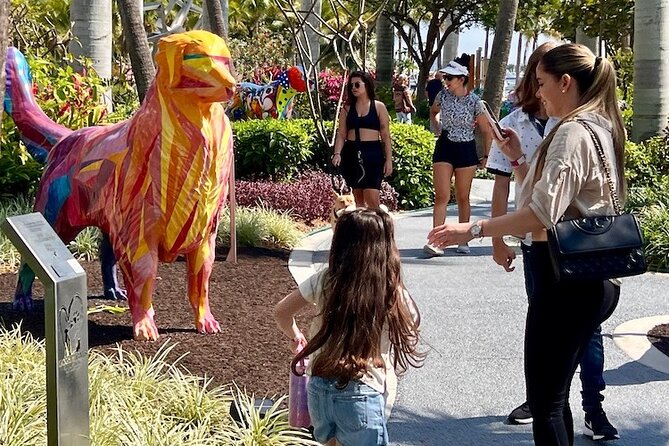
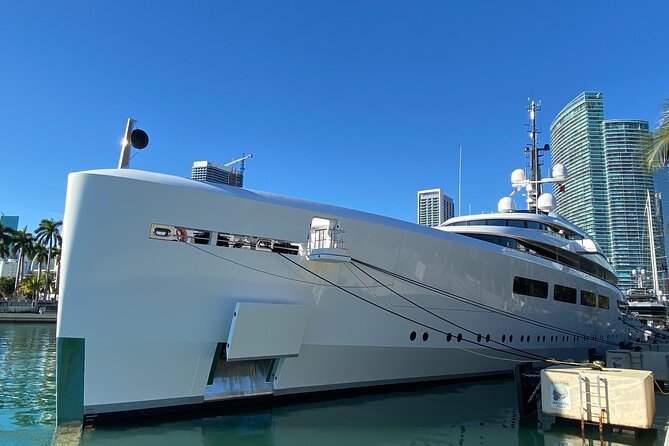
You pass the Pérez Art Museum and Frost Science, two major cultural institutions. You also see the colorful Dog and Cat art installation, along with mega-yachts, cruise ship departures, and marine life.
This part of the walk gives you the broadest sense of Miami’s setting. The city is not only towers and streets. It is also a waterfront port with museums, large ships, boats, and public spaces.
The route does not include admission to either museum. If you want to visit them, plan a separate stop and allow more time than the walking tour provides. The park section is best treated as an outdoor overview and a chance to take photographs.
Freedom Tower and Miami’s Cuban story
The final major stop is Freedom Tower, a Mediterranean Revival landmark tied to Miami’s Cuban community. The building became a symbol of freedom for Cubans who left Castro’s Cuba and made Miami their home.
This stop gives the tour an important political and cultural dimension. Miami’s identity is shaped by migration as much as by construction and commerce. Freedom Tower helps explain why Cuban history is central to understanding the city.
The stop lasts about 10 minutes. It is enough for the guide to explain the building’s role and for you to appreciate its exterior, but not enough for an extended museum visit. If Cuban history is one of your main interests, pay close attention here and consider returning to the building separately.
The Cuban cafecito adds a local pause
A Cuban cafecito at a local ventanita is included, along with coffee or tea. This is a small but useful touch. The drink gives you a taste of Miami’s Cuban daily life, not just a landmark connected to it.
The stop also breaks up two hours of walking. Since the tour takes place at 10 a.m., the coffee fits naturally into the morning. The exact ventanita and timing are not specified, so treat it as a route stop rather than a full food experience.
Is $65 a fair price for two hours?
At $65 per person, this is not the cheapest way to see downtown Miami. You can walk many of these streets without paying an admission fee. The value comes from the guide’s interpretation, the small group, access to selected historic buildings and skyscraper spaces, and the way the stops are connected into one story.
I think the price makes more sense for a first visit, especially if you want architecture and local history explained as you walk. It is less compelling if you prefer to move at your own pace, spend long periods inside museums, or stop for shopping in the jewelry district.
The maximum group size of 10 is a real advantage. Large groups often make city walking tours feel slow and impersonal. A small group should make it easier to hear the guide and ask about buildings that catch your eye.
The tour is offered in English and requires good weather. Wear comfortable shoes and be ready for outdoor walking in Miami’s sun. The route is near public transportation, and most people can participate, but the supplied information does not give a precise distance or detailed accessibility assessment.
Free cancellation is available until 24 hours before the 10 a.m. start time. If poor weather cancels the tour, you can receive another date or a full refund.
Who should book this downtown walk?
Book it if you want a guided introduction to Miami’s architecture, Cuban history, waterfront, and downtown development in one compact outing. It is especially useful early in a Miami stay, when you want to understand the city before choosing which museums, churches, theaters, or districts deserve more of your time.
It suits people who enjoy city history but do not want a formal museum lecture. It also works well for anyone curious about how an old river settlement became a modern financial center.
I would skip it if you want a relaxed stroll with long stops. The schedule is tight, and several landmarks receive only five minutes. If you prefer independent exploration, use the route as a map and spend your $65 elsewhere.
For most first-time visitors who value a strong guide, the tour offers a well-planned introduction. The architecture focus, small group, Cuban cafecito, and mix of old and new Miami give it more substance than a simple downtown photo walk.
FAQ
How long does the tour last?
The tour lasts approximately two hours.
What time does the tour begin?
The tour starts at 10 a.m.
Where does the tour begin?
The meeting point is 315 South Biscayne Boulevard, Miami, Florida 33131.
Where does the tour end?
The tour ends in Park West, Miami, within Miami Worldcenter.
What language is the tour offered in?
The tour is offered in English.
What is the maximum group size?
The tour has a maximum of 10 people.
Is a drink included?
Yes. A Cuban cafecito at a local ventanita is included, along with coffee or tea.
Does the price include museum admission?
No museum admission is listed as included. The route passes the Pérez Art Museum and Frost Science in Maurice A. Ferré Park.
Can most people participate?
The tour information says most people can participate. It also notes that the route is near public transportation.
Can I cancel for a full refund?
Yes, if you cancel at least 24 hours before the experience start time. Poor weather cancellations offer a different date or a full refund.
New on the Miami list
- Miami: Wynwood Walls Street Art and Food Walking Tour★ 4.9 · 43 reviews
- Wynwood walking tour in French (2h)★ 4.9 · 9 reviews
- Wynwood Walls Street Art & Neighborhood Walking Tour★ 4.9 · 9 reviews
- Miami: HIDDEN WORLD OF MIAMI DESIGN DISTRICT★ 5.0 · 3 reviews
- Walking Tour with Cocktails(optional) Miami★ 4.9 · 18 reviews
- VIP Walking Tour of Little Havana★ 4.5 · 36 reviews
- Beach Yoga Experience in Miami Beach★ 5.0 · 53 reviews
- Beach Yoga & Tea Experience on South Beach★ 5.0 · 19 reviews
Miami Walking Tours, compared.
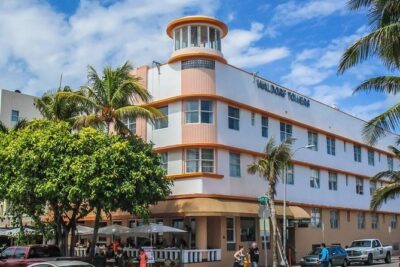
The Official Art Deco Walking Tour by The Miami Design Preservation League
Read our review →
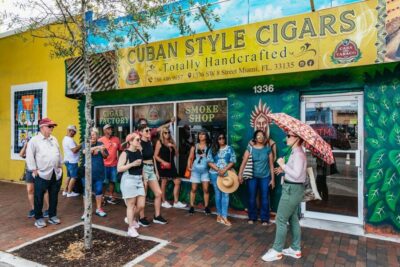
Little Havana Food Walking Tour with Tastings
Read our review →

Walking Food Tour of Little Havana with Cuban Dishes Tasting
Read our review →
Browse the lists this tour appears in