
Reviewed · MIAMI WALKING TOURS
Miami Beach Smartphone Audio Walking Tour
Miami Beach’s famous Art Deco hotels are only part of this walk. The route also takes you through a tropical garden, a moving Holocaust memorial, public art, music venues, landscaped parks, and the grand hotels along Ocean Drive. The commentary turns a pleasant stroll into a lesson in how Miami Beach changed over time.
I like the freedom to start and stop whenever you wish, and I like that the GPS map keeps you pointed in the right direction without requiring a guide or a scheduled meeting. At $10.99, it is an inexpensive way to add context to South Beach. The tradeoff is that the audio cannot answer questions, and a few facts may feel dated.
Key points at a glance
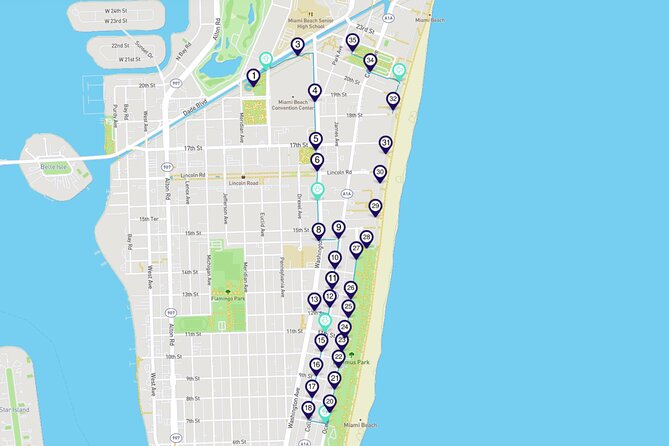
- A self-guided route through Miami Beach: Start at the Miami Beach Botanical Garden and finish back at the same point.
- More than Art Deco: The walk includes the Holocaust Memorial, Soundscape Park, public sculpture, The Bass, and the New World Center.
- Useful offline design: Download the tour on Wi-Fi, then follow the live GPS map without using mobile data.
- Flexible timing: Take roughly two to three hours, or pause and return to the tour later.
- Strong value at $10.99: You get the audio route and commentary without paying for a private guide or group schedule.
- Best with comfortable shoes: The route covers several acres of gardens, parks, and city streets.
A Miami Beach walk that goes beyond Ocean Drive
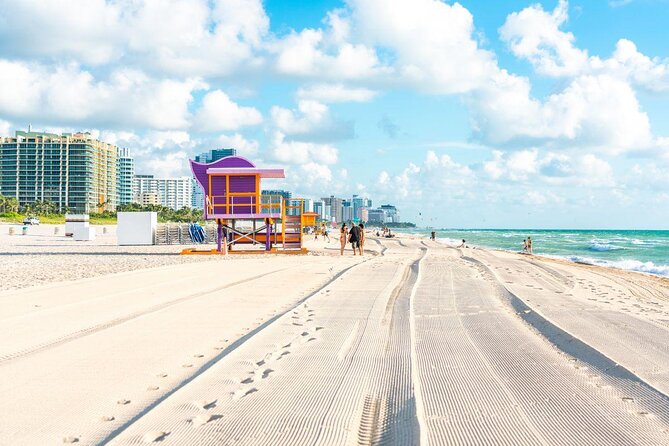
This audio walk gives you a broad look at Miami Beach rather than a short march down the postcard-famous strip. You begin at 2000 Convention Ctr Dr, near the Miami Beach Botanical Garden, then make your way through central Miami Beach and South Beach before returning to the starting point.
The route is designed for about two to three hours, but the app does not force you to keep moving. You can pause for lunch, stop to enter a museum, take photographs, or simply wait for the heat to ease. That flexibility is a major advantage over a scheduled group walk.
You provide the phone or tablet. Headphones are optional because the commentary can play through your device speaker. I would still bring headphones if you are walking with someone else or want to hear the narration clearly on busy streets.
More Walking Tours in Miami Beach
- South Beach Cultural Food and Walking Tour
★ 5.0 · 1,284 reviews - Miami South Beach Art Deco Walking Tour
★ 5.0 · 1,039 reviews - Miami Beach Food and Art Deco Walking Tour
★ 4.5 · 245 reviews
Begin among palms, gardens, and local memory
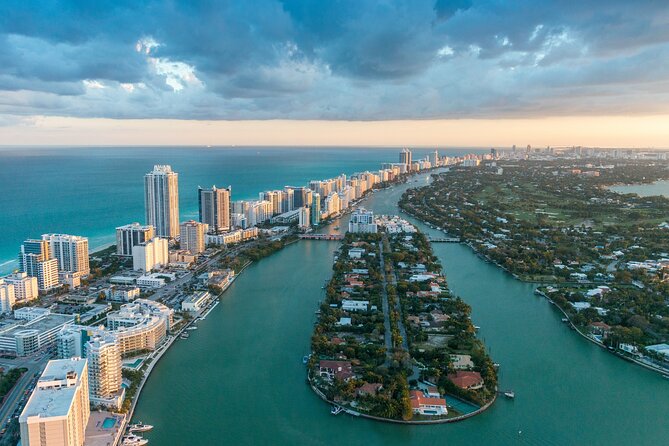
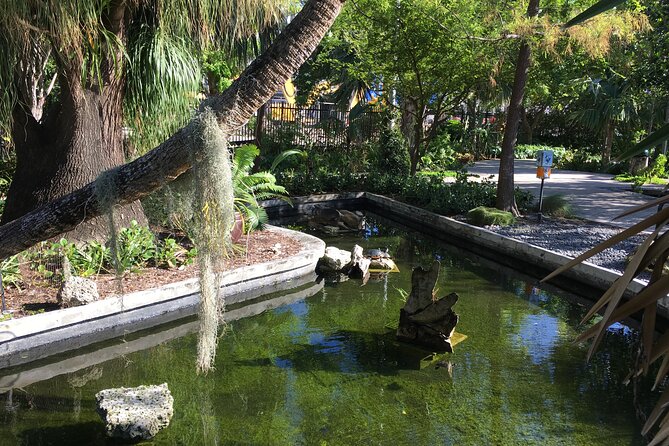
The Miami Beach Botanical Garden provides a calmer opening than Ocean Drive. The tour explains how the city created a four-acre garden center in the 1960s to grow tropical fruit. That detail helps you see the site as more than a patch of greenery. It reflects Miami Beach’s long effort to make a resort city feel tropical and carefully planned.
The garden is also a practical place to get your bearings before the longer walk. You can settle into the app, check the GPS route, and make sure the audio is working. Since the tour is downloaded in advance, do that before arriving on Wi-Fi. The directions specifically state that you do not need a signal or mobile data during the walk.
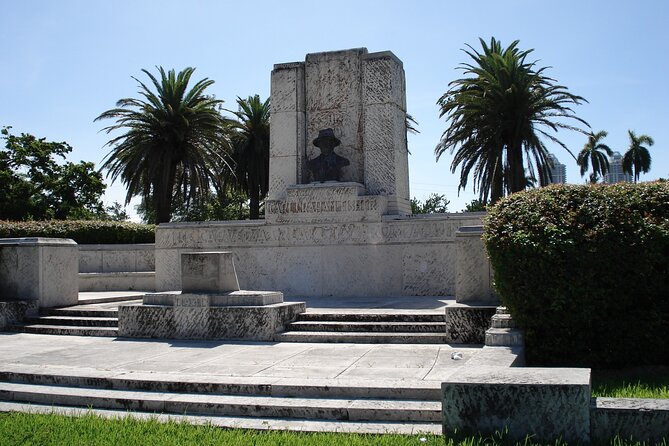
From there, the route leads to the Holocaust Memorial. This is one of the most serious stops, and it changes the mood of the tour. The memorial was conceived in 1984 by a committee of Holocaust survivors, and the site had a direct connection to survivors before becoming a public place of remembrance.
The audio adds useful background, but allow yourself time to look around quietly. This is not simply another architectural stop to check off. It asks you to slow down and consider the Jewish community that helped shape Miami Beach.
Public art, music, and a new side of Miami Beach
The route continues through a 2.8-acre green space filled with aluminum sculptures called Humanoids. These works give you something to look for as you walk, and they break up the steady rhythm of hotel façades and commercial streets.
Next comes the New World Center, originally opened in 1958 and heavily renovated from 2015 through 2018. The audio points out the scale of that work and the large cost involved. You do not need to buy a concert ticket to appreciate the building from outside, though attraction tickets are not included in the tour.
Soundscape Park follows as another change of pace. This contemporary park links music, design, and culture in a compact urban setting. It is a good example of the newer Miami Beach, where public space and performance venues matter as much as historic hotels.
The route also explains that some of the land beneath you was once a forest of mangroves. That small environmental detail is useful because it connects modern Miami Beach to the coastal conditions that shaped its development. The city may look heavily built today, but its ground and shoreline began with saline water and hardy coastal plants.
Espanola Way and the city after dark
Espanola Way is one of the more social sections of the walk. Shops and restaurants now fill the pedestrian-friendly area, and the route describes its current revival as a place for people to meet, create, and celebrate.
You can make this stop work in two ways. During the day, it gives you a good pause in the route. In the evening, it can become a natural place to stop for a meal, though the tour itself is still an audio walk rather than a food experience.
The commentary then turns to an entertainment venue with roots going back to the 1930s. The supplied details do not name every stop in the route description, so the audio itself is important here. You should think of this section as a chance to learn how Miami Beach’s nightlife and performance culture developed alongside its hotels.
That mix is one of the tour’s strengths. It does not treat Miami Beach as a museum frozen in the Art Deco period. You see a city built for leisure, reshaped by preservation, and still used for music, dining, and nightlife.
More days out along Miami Beach and South Beach:
- Miami: Half-Day Open-Top Bus Tour Plus Biscayne Bay Cruise
★ 4.1 · 2,420 reviews - A Taste of South Beach Food Tour
★ 5.0 · 1,120 reviews - Miami: South Beach Private 50-Minute Private Flight Tour
★ 4.8 · 941 reviews - Miami: Duck Tour of Miami and South Beach
★ 4.5 · 698 reviews
Reading the Art Deco details along Collins Avenue
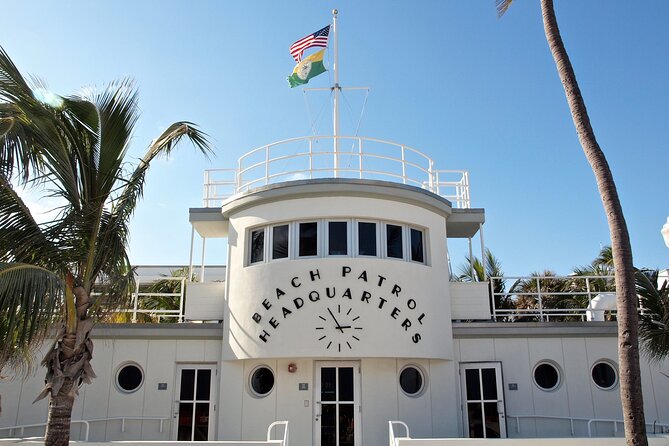
The most concentrated history arrives as you reach the Art Deco buildings. Several stops focus on architect Henry Hohauser, who designed the Webster in 1939 and helped define Miami Beach’s Streamline Moderne look.
The Webster is used to explain Hohauser’s rule of three. Look for repeated groupings and balanced design elements as the commentary describes them. This is the kind of detail that can be easy to miss if you walk past the building alone. With the audio playing, you begin to notice that the façades are not just colorful decoration. Their lines, windows, and proportions were carefully arranged.
The route also visits a hotel that became a tropical retreat for major recording artists and performers in the 1990s. The narration names some of those figures and adds a pop-culture layer to the architecture.
The World Erotic Art Museum appears as another unusual stop. Founded in 2005 by American art collector Naomi Wilzig, it is presented as one of Miami Beach’s less obvious cultural attractions. Admission is not included, so consider the audio stop a short introduction rather than a museum visit.
You also pass an architecturally important building that has received awards for restoration, followed by the Tony Hotel, which opened as the Tiffany Hotel. These details show how often Miami Beach buildings change names and uses while keeping their original forms.
Ocean Drive’s neon signs and famous façades
The walk eventually reaches the stretch most people picture when they hear South Beach. The bright blue neon sign at the Colony Hotel has looked over Ocean Drive for nearly 90 years, making it one of the route’s easiest visual markers.
The Breakwater Hotel receives its own stop, as does an Art Deco building described as a Miami Beach icon. The route also explains the preservation nonprofit founded in 1976 to protect and improve the city’s architectural and cultural identity. That context matters because the postcard look of South Beach did not simply survive by accident. Preservation work helped keep these buildings in use.
Casa Casuarina, better known as the Versace Mansion, is another major stop. The story centers on its connection to Italian fashion designer Gianni Versace. It is a memorable place to see from the street, but remember that the tour does not include entry to any attraction.
The stretch continues with one of the city’s grand beachfront hotels, described as a particularly elegant Art Deco example. Then comes the Carlyle, which has appeared in films and television programs over its 75-year history. The audio names some of those productions, giving the building a place in popular culture as well as local history.
Spotting the design language in the hotels

The Cavalier is used to explain traditional Art Deco style, including the rounded lines that resemble the fender of a Studebaker. That comparison makes the design easier to picture. Miami Beach’s buildings often look smooth and aerodynamic because the architects borrowed from the age of cars, ocean liners, and modern machinery.
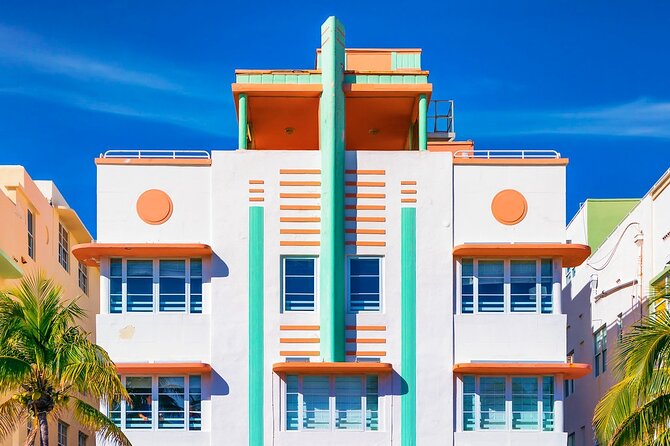
The commentary calls the Cavalier a masterpiece of the movement, then turns to the McAlpin, considered a near-perfect example of Art Deco design. These stops are most useful if you pause long enough to compare the façades instead of treating each hotel as a separate photo opportunity.
The route also covers a hotel that marks Miami Beach’s shift toward modern resort architecture. That transition is important. The city did not stop changing after the 1930s. Later buildings reflected new ideas about space, comfort, and the resort business.
The Delano adds another surprising detail. Built in 1947 by Rob and Rose Schwartz, it was first used as military housing. It later became one of the best-known names on South Beach, showing how a building’s purpose can change as the city’s economy changes.
Parks, sculpture, and The Bass
After the hotels, the tour brings you back toward landscaped paths and public art. You may come across works placed along the walking route rather than gathered in one formal gallery. This gives the final section an open-air feel and lets you take the city at a slower pace.
The Bass gets a dedicated explanation of its origins and its role in Miami Beach culture. The museum adds a contemporary art stop to a route otherwise dominated by architecture, memorials, and resort history. Admission is not included, but you can decide if you want to return for a separate visit.
This final portion helps keep the walk from becoming a single-subject Art Deco tour. You get gardens, sculpture, a memorial, music spaces, hotels, nightlife, and museums in one outing. That breadth is especially useful if you are new to Miami Beach and want an overview before choosing which places deserve more of your time.
How the phone tour works in real use
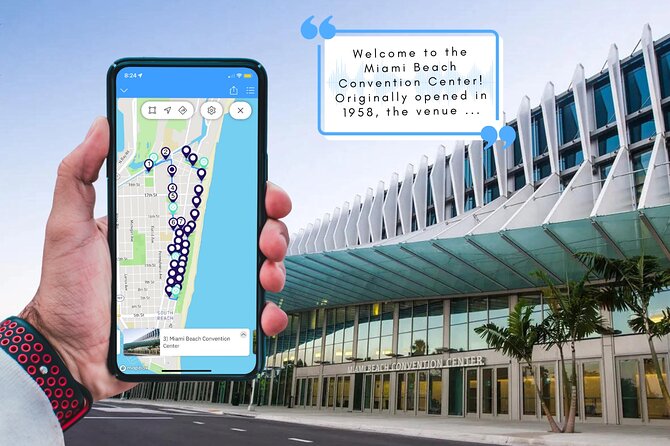
The audio commentary automatically plays when you reach each point of interest. A live GPS map shows both your position and the route, which is helpful when city blocks, parks, and hotel entrances make the direction less obvious.
The best preparation is simple:
- Download everything on Wi-Fi before leaving.
- Charge your phone fully.
- Bring headphones if you want private listening.
- Wear shoes suited to two or three hours of walking.
- Keep water with you, especially if you start during the warmer part of the day.
- Leave room for pauses at the memorial, parks, shops, or museums.
The app is yours to keep and use on a flexible date. There is no time limit for completing it, so you can divide the route if the heat, weather, or your schedule becomes a problem.
The listed availability runs daily from midnight until 11:30 p.m. That is unusually broad, but the route will be most useful when you can see the buildings and public art. I would choose daylight for the gardens and memorial, then consider an afternoon start if you want to finish near Ocean Drive in the evening.
What $10.99 gets you
At $10.99 per person, the tour offers good value if you want historical context without joining a set group. The price is low compared with a private guide, and you can share the experience with your own party without waiting for other people to take photographs or keep up.
The value is less clear if you prefer live conversation. There is no guide walking beside you, no chance to ask follow-up questions, and no guaranteed update for every stop. One note from the experience points out that some information could use updating. That is worth keeping in mind in a city where restaurants, hotels, and venues change often.
Still, the audio format does something a standard map cannot do. It tells you why a building matters, points out the rule of three at the Webster, explains the Versace connection, and gives the hotels a place in the city’s larger story. The technology is simple, but useful.
The tour is listed with a maximum of 50 people, though a self-guided format means you do not move as one group. You can begin alone, with friends, or with family, and set your own pace.
Who should choose this Miami Beach audio walk
I would choose this tour if you want a broad first look at Miami Beach and dislike fixed departure times. It works well for people who want to fit sightseeing around a meal, a beach visit, or another appointment.
It also suits independent walkers who enjoy architecture but do not want an entire tour focused only on buildings. The Holocaust Memorial, mangrove background, public art, music venues, and museums give the route more variety.
Families and mixed-age groups may appreciate the ability to pause. Someone interested in a sculpture can linger, while another person can stop for food or photos. Service animals are allowed, and the route is near public transportation.
You should think twice if you need a highly polished, up-to-date guide or personal interaction. The audio cannot adapt to road closures, temporary changes, or your questions. You also need a moderate level of physical fitness, since the experience involves an extended walk through gardens, parks, and city streets.
Should you book it?
Book it if you want a low-cost, flexible introduction to Miami Beach and are willing to manage your own phone, route, and pace. The strongest reasons are the offline GPS design, the wide mix of stops, and the freedom to start or pause whenever you like.
Skip it if you want a live guide, a tightly researched specialist tour, or admission to museums and other attractions. For most independent visitors, though, $10.99 is a fair price for a two to three-hour audio walk that connects the tropical garden, memorial, public art, music scene, and Art Deco hotels into one sensible route.
Free cancellation is available up to 24 hours before the local start time. Cancellations made within 24 hours are not refunded.
FAQ
How long does the Miami Beach Smartphone Audio Walking Tour take?
The tour takes approximately two to three hours. You can also pause it and complete it at your own pace because there is no time limit.
Where does the tour start and finish?
It starts at the Miami Beach Botanical Garden, 2000 Convention Ctr Dr, Miami Beach, Florida 33139. The tour ends back at the same meeting point.
Does the tour require mobile data?
No. Download the tour using Wi-Fi before you begin. After that, the route and audio can be used without a signal or mobile data.
Is the tour available in languages other than English?
The tour is offered in English.
Are attraction tickets included?
No. Tickets for attractions such as museums or other venues are not included in the $10.99 price.
What happens if I need to cancel?
You can receive a full refund if you cancel at least 24 hours before the experience start time. Cancellations or changes made less than 24 hours before the start time are not accepted for a refund.
More self-guided audio tours in Miami Beach
- Miami Beaches Self-Guided Driving Audio Tour
★ 4.5 · 3 reviews - Self-Guided Audio Tour in Florida Keys
★ 4.5 · 84 reviews - Everglades National Park: Self Guided Driving Audio Tour
★ 4.5 · 58 reviews - Self-Guided Audio Tour – Little Havana
★ 3.0 · 9 reviews
New on the Miami Beach list
- Beach Yoga Experience in Miami Beach★ 5.0 · 53 reviews
- Beach Yoga & Tea Experience on South Beach★ 5.0 · 19 reviews
- Island Fun Yacht Rental in Miami Beach★ 5.0 · 21 reviews
- Electric Bike Tour in South Beach★ 5.0 · 11 reviews
- Private Golf Cart Tour of Miami Beach★ 5.0 · 8 reviews
- Miami Beach Paddleboard Rental with Instruction★ 3.5 · 7 reviews
- Transfers from Miami Airport to any Miami and Miami Beach area★ 5.0 · 12 reviews
- Miami Beach: Luxury Private 50-min Airplane Tour★ 5.0 · 16 reviews
Miami Walking Tours, compared.


The Official Art Deco Walking Tour by The Miami Design Preservation League
Read our review →
Little Havana Food Walking Tour with Tastings
Read our review →

Walking Food Tour of Little Havana with Cuban Dishes Tasting
Read our review →
Browse the lists this tour appears in