
Reviewed · HISTORICAL TOURS
La Perle de Miami: Little Haiti History, Culture, Tour
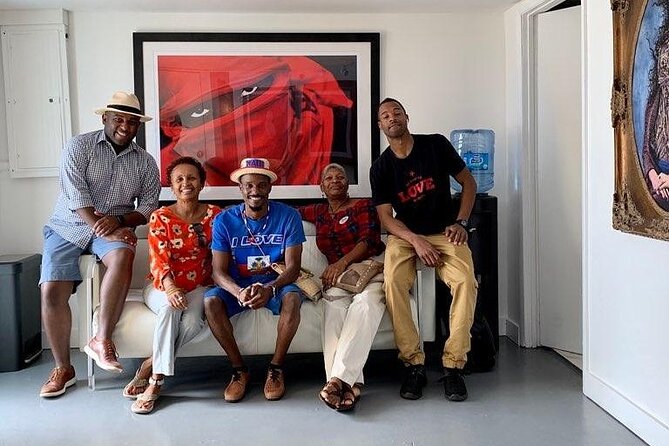
Little Haiti is best understood through the people who built it. This 90-minute tour goes beyond painted walls and photo stops, connecting Haitian migration, Creole language, Vodou, local business, music, food, and the neighborhood’s fight against overdevelopment. Guides including Abraham, Antoine, and Cedelka have led guests through the area with a personal connection to its story.
I like the local perspective, especially when the guide introduces you to community figures, a bookstore, a market, or a cultural center. I also like that Haitian snacks are included, with past tours featuring a patty and ice cream. The main concern is reliability: two people reported arriving to find no guide, so confirm the meeting details and contact the operator before setting out.
Key points
- Local guides with personal ties: Abraham, Antoine, and Cedelka have been praised for explaining Haitian culture, language, and neighborhood change.
- More than a walking loop: Stops can include the Little Haiti Cultural Complex, a bookstore, art spaces, markets, a bakery, and other local sites.
- Food adds a useful taste of place: Traditional Haitian snacks are included, with patty and Haitian ice cream mentioned by past participants.
- A short introduction, not a full neighborhood study: The 90-minute format gives you a starting point for exploring Little Haiti on your own.
- Meeting point matters: The tour begins and ends at 212 NE 59th Terrace, at the Little Haiti Cultural Complex.
- A small reliability warning: The overall score is 4.4 from 20 ratings, but two separate reports describe a no-show.
Little Haiti beyond South Beach
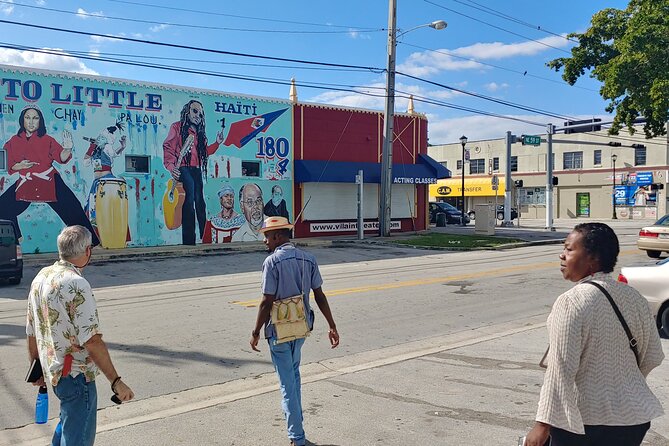
Miami often gets reduced to beaches, nightclubs, and glossy hotels. Little Haiti offers a different view of the city, one shaped by Haitian migration, family businesses, language, religion, art, and community organizing.
That change in focus is the best reason to book this experience. You are not simply looking at a neighborhood from a bus window. You are being given context for why it exists, how it developed, and what it means to people who live there.
The tour begins at the Little Haiti Cultural Complex, at 212 NE 59th Terrace. From there, your guide leads a roughly 90-minute introduction to the area. The exact route can vary. Past outings have included the cultural center, a locally owned bookstore, a bakery, an open-air market, an art gallery, a record shop, a farm, and a traditional Haitian rural-style home located in Miami.
That variety matters. Little Haiti is not one single attraction. It is a working neighborhood with many layers. One stop may explain language. Another may show food and shopping. Another may introduce an artist, shop owner, religious practitioner, or community advocate.
More history and heritage tours in Miami:
- Award-winning Art Deco & History Walking Tour in Miami Beach
★ 5.0 · 138 reviews - Miami Beach Art Deco & History Bike Tour with Design Enthusiast
★ 5.0 · 135 reviews - Miami Small Group Boat Tour: History, Wildlife, and Stiltsville
★ 5.0 · 65 reviews
The value of a guide who knows the neighborhood
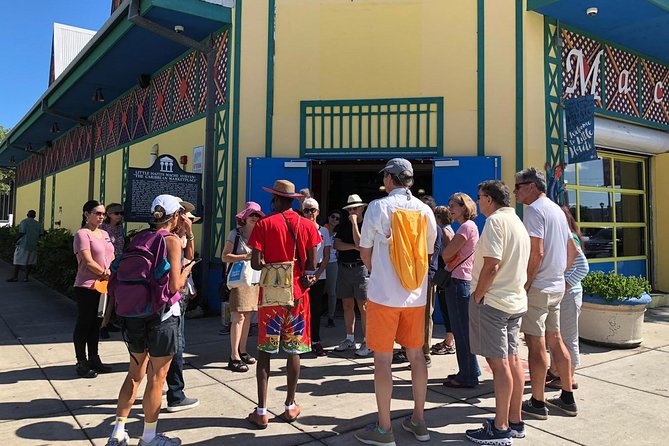
The strongest part of this tour is the guide’s role. Abraham, also referred to as Abe in one account, has been praised for explaining Haitian migration, the transformation from Lemon City to Little Haiti, Creole language, religion, and current pressure from gentrification and overdevelopment.
Cedelka has also led the tour, sharing personal experiences from Haiti and explaining how everyday life in the neighborhood reflects Haitian customs. Antoine has been described as friendly and well informed, with a talent for making the tour easy to follow.
You should not expect every departure to have the same guide or the same exact sequence of stops. That is both the charm and the uncertainty. This is a people-focused outing rather than a fixed museum route. If you are interested in history, language, religion, or local politics, tell your guide early. The best accounts came from people who asked plenty of questions.
I would arrive ready to listen and to ask respectful questions. Haitian identity in Miami is not a single story, and the tour can touch on faith, migration, language, business, and neighborhood change in a short time.
What you may see at the Little Haiti Cultural Complex
The cultural complex is the natural starting point. It gives you a place to orient yourself before moving into the surrounding streets.
The value of this stop is context. You get a frame for the neighborhood’s artistic and cultural life before seeing smaller businesses and local gathering places. An art gallery has been part of some visits, and the exhibitions change during the year. That means the gallery is a welcome addition, but you should not book the tour expecting one particular show.
The cultural center also helps correct a common mistake. Little Haiti is not just a restaurant district or a colorful backdrop for photographs. The neighborhood has institutions that preserve and promote Haitian culture, and the tour uses those places to explain how the community presents itself.
The amount of time at the complex can vary depending on the route and the guide. In a 90-minute tour, no single stop can receive an hour-long treatment. Think of this as an introduction that points you toward places worth revisiting.
Markets, bookstores, and everyday Little Haiti
Some of the most useful stops are ordinary ones. An open-air market, a grocery visit, or a locally owned bookstore can tell you more about daily life than a polished attraction.
A market gives you a look at how people shop, eat, and maintain familiar habits in Miami. A bookstore can open a conversation about Haitian literature, language, and education. One particularly detailed outing included a meeting with a linguist connected with the first library in Little Haiti, along with a discussion about Creole’s development and language politics.
That kind of meeting is not something I would treat as guaranteed. It depends on the day, the route, and who is available. Still, it shows what makes this tour different from a standard sightseeing walk. The guide may connect you with people who have helped shape the neighborhood, rather than simply pointing out buildings.
You should also expect some commercial stops to be practical rather than staged. The point is not to watch a performance of Haitian life. It is to see a community functioning in the middle of Miami.
A different kind of day out in Miami altogether:
- Little Havana Food and Walking Tour in Miami
★ 5.0 · 8,882 reviews - From Miami: Everglades Airboat, Wildlife Show & Bus Transfer
★ 4.2 · 8,622 reviews - Miami: Biscayne Bay Millionaire’s Homes Sightseeing Cruise
★ 4.5 · 7,348 reviews - Miami: Everglades National Park Airboat Tour & Wildlife Show
★ 4.5 · 7,296 reviews
Haitian food, patties, and ice cream
Food is a small but important part of the experience. Traditional Haitian snacks are included, and past tours have featured a Haitian patty and ice cream.
A patty is a useful introduction to Haitian flavors because it is familiar in form but tied to local food traditions. Haitian ice cream adds a sweeter finish. These tastings will not replace a full meal, so plan lunch or dinner separately unless your guide tells you otherwise.
One outing ended at Chef Creole, but you should not assume that a full restaurant meal is included in the standard price. The confirmed feature is traditional snacks. Treat any larger meal or restaurant stop as dependent on the route and timing.
Food also gives you an easy way to keep the conversation going. Ask your guide what is commonly eaten at home, what differs between Haiti and Miami, and which local food businesses are worth returning to. The snack is brief, but it can lead to a better understanding of how culture travels through a neighborhood.
Music, art, religion, and community voices
Little Haiti’s cultural life reaches well beyond food. Music and art have featured in the experience, and a record shop or gallery may be part of the route.
A particularly unusual account described a visit with a practitioner of Haitian Vodou. This offered a chance to ask questions about a religion that is often misunderstood in popular culture. If a similar stop is available during your tour, approach it with courtesy and avoid treating it as a spectacle.
The guide may also explain the role of language. Haitian Creole is central to Haitian identity, and one guide has taught basic Creole phrases during the tour. Even a few words can help you understand how language preserves community ties across generations.
These stops are valuable because they give you people and ideas, not just scenery. They also require an open mind. If you want only quick photo opportunities, the tour may feel too conversational. If you enjoy listening to personal stories and asking questions, the format should suit you well.
Lemon City, migration, and neighborhood change
A good guide can connect present-day Little Haiti with the older Miami area known as Lemon City. The tour explains how Haitian immigrants formed a community and how the neighborhood came to be called Little Haiti.
That background gives you a better way to read the streets. Shops, churches, markets, cultural centers, and homes are not random features. They reflect migration patterns, family networks, economic needs, and efforts to maintain cultural identity.
The tour also addresses current challenges, including gentrification and overdevelopment. This is an important part of the experience, though it can make the conversation more serious than a typical sightseeing stroll. You may hear competing views about preservation, investment, housing, and who gets to define the neighborhood’s future.
I appreciate that the tour does not present Little Haiti as frozen in the past. The community has changed, and it continues to change. That makes the experience more useful than a simple heritage presentation. You get a sense of both cultural continuity and pressure from Miami’s wider property market.
Walking, driving, and the 90-minute limit
The experience is described as a guided walking tour, but past outings have also included driving around the neighborhood. A golf cart was unavailable on at least one occasion, so transportation can vary.
Do not book this expecting a guaranteed golf-cart ride or a long drive through every corner of Little Haiti. The reliable promise is a guided introduction based around the Little Haiti Cultural Complex and nearby points of interest.
The short duration is both an advantage and a limit. Ninety minutes works well if you want a first look before exploring alone. It is easy to fit into a Miami day, and you still have time afterward for food, shopping, or another attraction.
On the other hand, you cannot expect a full study of Haitian history, religion, language, politics, food, and art in one session. One participant described it as a light introduction that inspired further exploration. That is the right way to approach it.
Wear comfortable shoes and allow enough time to reach the meeting point. The tour begins and ends at the same location, which simplifies planning once you arrive.
Price, group size, and booking confidence
At $50 per person, the price is reasonable if your guide provides the personal introductions and food tastings that have made this experience valuable. The cost is less compelling if the route becomes a very brief walk with few stops.
The advertised maximum is 50 people. That is a large possible group for a neighborhood tour, though the actual size of a departure can differ. A bigger group may make intimate conversations harder, especially in a small bookstore, shop, or gallery.
The overall rating is 4.4 from 20 ratings, with many strong scores praising the guides, cultural context, snacks, and organization. There are also two serious complaints about the guide not arriving and the operator being unreachable. The provider apologized for the missed connections and advised contacting the tour before the start time to anticipate arrival.
I would take that warning seriously. Confirm the meeting point at the Little Haiti Cultural Complex, keep your booking confirmation handy, and contact Tap Tap Tours before departure if you have any uncertainty. This is especially important because the meeting location may be inconvenient to reach by taxi, and a no-show can cost you both time and transportation money.
The booking includes a mobile ticket, and the tour is offered in English. Service animals are allowed, it is near public transportation, and most people can participate. Weather matters: poor conditions may lead to a new date or a full refund.
Who should book this Little Haiti tour
I would recommend it to you if you want Miami beyond South Beach and prefer local stories to a checklist of landmarks. It fits solo visitors, couples, and families who enjoy conversation, food, neighborhood walks, and cultural explanation.
It is especially suitable if you are curious about:
- Haitian migration to Miami
- Haitian Creole and language
- Haitian art and music
- Local food and shopping
- Vodou and other cultural traditions
- Neighborhood preservation and development
- Everyday life in Little Haiti
You may want a different experience if you need a tightly timed route, guaranteed transportation, or a major attraction at every stop. The itinerary can change, some personal introductions may not happen, and the short tour only gives you a first layer.
Should you book Tap Tap Tours?
Book this tour if you want an accessible introduction to Little Haiti led by someone who can explain the neighborhood from a personal angle. Abraham, Antoine, and Cedelka have each been associated with the experience, and the strongest parts are the conversations, cultural stops, and chance to taste Haitian snacks.
I would not book it blindly. The no-show reports are a real concern, even though most of the available feedback is strongly positive. Contact the operator before you leave for the meeting point, arrive at the Little Haiti Cultural Complex, and keep your expectations flexible.
For $50, this can be a worthwhile first step into a part of Miami many visitors miss. Just remember that the tour opens the door. Your best follow-up may be returning to Little Haiti on your own for a longer meal, more shopping, or another visit to the places that catch your interest.
FAQ
Where does the Little Haiti tour begin?
The tour begins at the Little Haiti Cultural Complex, 212 NE 59th Terrace, Miami, Florida 33137.
Where does the tour end?
The activity ends back at the meeting point at the Little Haiti Cultural Complex.
How long does the tour last?
The tour lasts approximately 1 hour and 30 minutes.
What language is the tour offered in?
The tour is offered in English.
Are food tastings included?
Yes. Traditional Haitian snacks are included. Past outings have featured a Haitian patty and ice cream.
How much does the tour cost?
The listed price is $50 per person.
What happens if bad weather cancels the tour?
If poor weather causes the experience to be canceled, you will be offered a different date or a full refund. You can also cancel at least 24 hours before the start time for a full refund.
New on the Miami list
- Miami: Wynwood Walls Street Art and Food Walking Tour★ 4.9 · 43 reviews
- Wynwood walking tour in French (2h)★ 4.9 · 9 reviews
- Wynwood Walls Street Art & Neighborhood Walking Tour★ 4.9 · 9 reviews
- Miami: HIDDEN WORLD OF MIAMI DESIGN DISTRICT★ 5.0 · 3 reviews
- Walking Tour with Cocktails(optional) Miami★ 4.9 · 18 reviews
- VIP Walking Tour of Little Havana★ 4.5 · 36 reviews
- Beach Yoga Experience in Miami Beach★ 5.0 · 53 reviews
- Beach Yoga & Tea Experience on South Beach★ 5.0 · 19 reviews
Historical Tours, compared.
Award-winning Art Deco & History Walking Tour in Miami Beach
Read our review →
Miami Beach Art Deco & History Bike Tour with Design Enthusiast
Read our review →
Miami Small Group Boat Tour: History, Wildlife, and Stiltsville
Read our review →
South Beach Food Tour- Culinary & Art Deco & History
Read our review →

Art Deco, History and Crime Bike Tour with Design Enthusiast
Read our review →Browse the lists this tour appears in